
Furnaces & Heating
High-efficiency furnace installation, repair, and maintenance.
About this service
When heat fails in a South-Eastern Ontario winter, you don’t need a sales pitch — you need a safe diagnosis and a fix that holds up through cold snaps, snow, and real-life use.
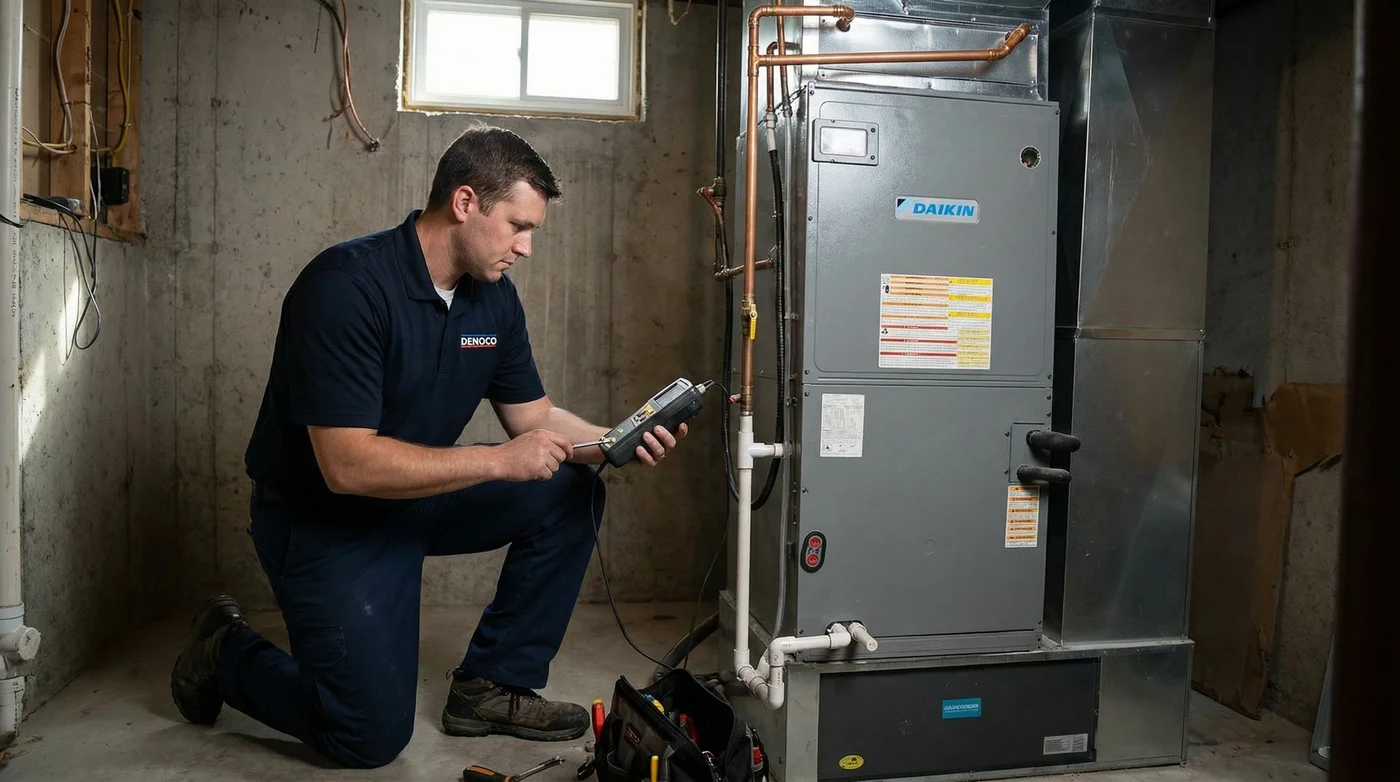
We repair, maintain, and install high-efficiency (condensing) gas furnaces, including Daikin and other reputable brands. Our focus is comfort plus safety: combustion checks, venting/condensate details that prevent freeze-ups, and airflow setup so the furnace can actually deliver its rated performance.
If repair is the smart move, we’ll say so. If replacement is safer or more cost-effective (for example: repeated failures or heat-exchanger risk), we’ll explain the trade-offs clearly and put them in writing.
Common questions
How much does furnace installation cost in Eastern Ontario?
Furnace installation in Eastern Ontario costs $3,500–$6,500 for most residential replacements, including the furnace, labour, and permit where required. An 80% AFUE mid-efficiency unit typically runs $3,500–$4,500 installed; a 96% AFUE high-efficiency condensing furnace runs $4,500–$6,500. Pricing varies based on access, venting modifications, and whether any ductwork changes are needed.
- 80% AFUE mid-efficiency furnace: $3,500–$4,500 installed
- 96% AFUE high-efficiency condensing furnace: $4,500–$6,500 installed
- Emergency call or diagnostic separate from replacement quote
- TSSA permit and inspection included in most installations
Pricing varies by site conditions, venting requirements, and equipment. We confirm all details before work begins.
What causes furnace breakdowns during South-Eastern Ontario cold snaps?
Most mid-winter no-heat calls come down to a few repeat causes: airflow restriction (filters/returns), ignition or flame-sensing issues, and high-efficiency venting/condensate problems that show up when temperatures drop. The fastest way to a durable fix is confirming the failure mode with testing — not guessing based on symptoms.
- Airflow issues (filter, restrictive returns, blocked registers) can trip safety limits
- Ignition/flame-sensing issues can cause intermittent lockouts
- Condensate/venting details can create nuisance shutdowns in deep cold or heavy snow
Do high-efficiency (condensing) furnaces need special venting in Ontario winters?
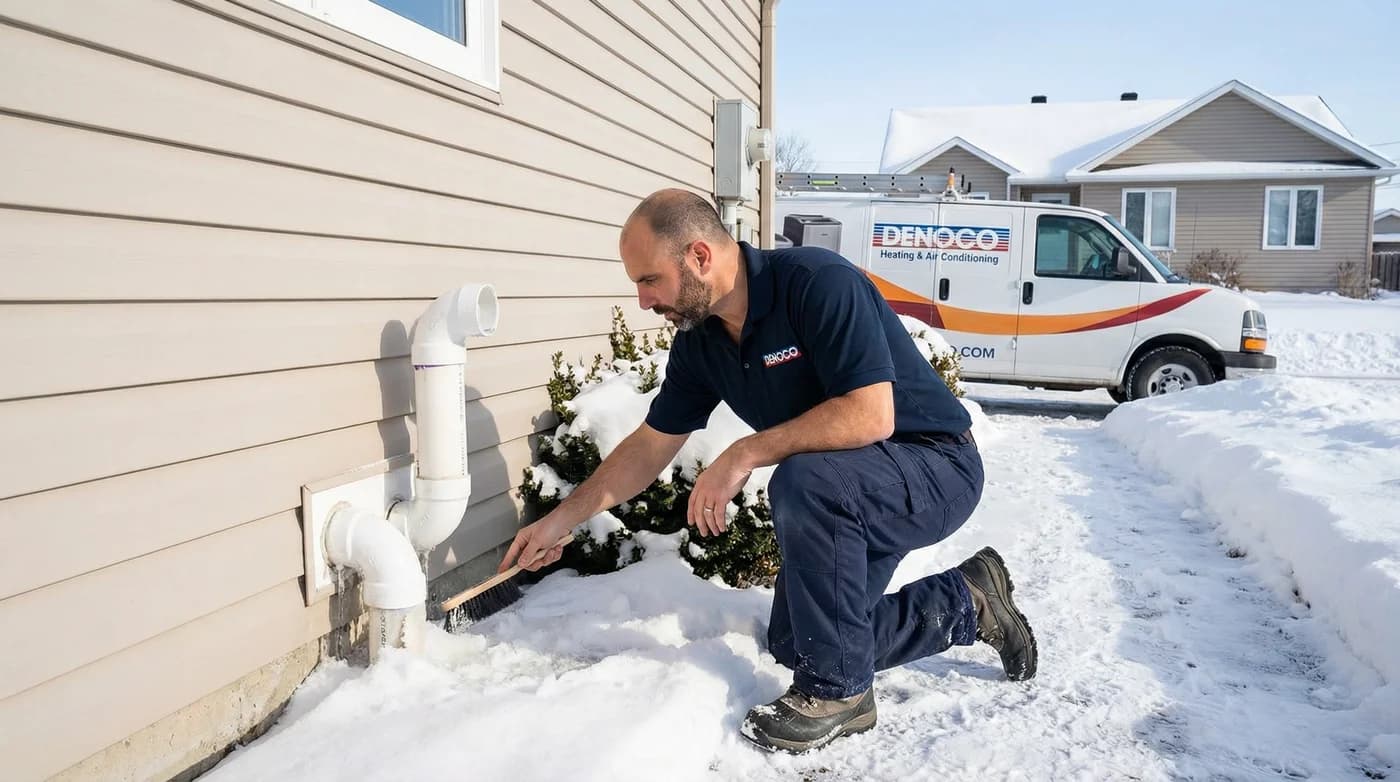
Yes. High-efficiency furnaces produce condensate and use plastic venting, so slope, termination placement, and drain management matter — especially in South-Eastern Ontario where snow, drifting, and freeze-thaw cycles are common. A good install anticipates winter conditions so you’re not dealing with repeated lockouts.
- Venting must be installed per manufacturer requirements and local code
- Condensate drains and traps need a reliable path and freeze-aware routing
- Outdoor vent terminations should be positioned to reduce snow/ice blockage risk
Exact requirements depend on furnace model and site conditions. We confirm details during assessment.
Repair vs replace: when is a new furnace the smarter move?
Replacement is often the better choice when a furnace is older and the risk is safety or repeat failure — not just one bad part. If the furnace is newer and the issue is isolated, repair is usually reasonable. We’ll explain the decision in plain English and give you options instead of forcing a yes/no.
- Recurring lockouts, repeated major repairs, or hard-to-source parts
- Any heat-exchanger safety concern or unresolved combustion/venting risk
- Comfort problems tied to sizing/airflow that a “repair” won’t solve
What brands do you install (including Daikin)?
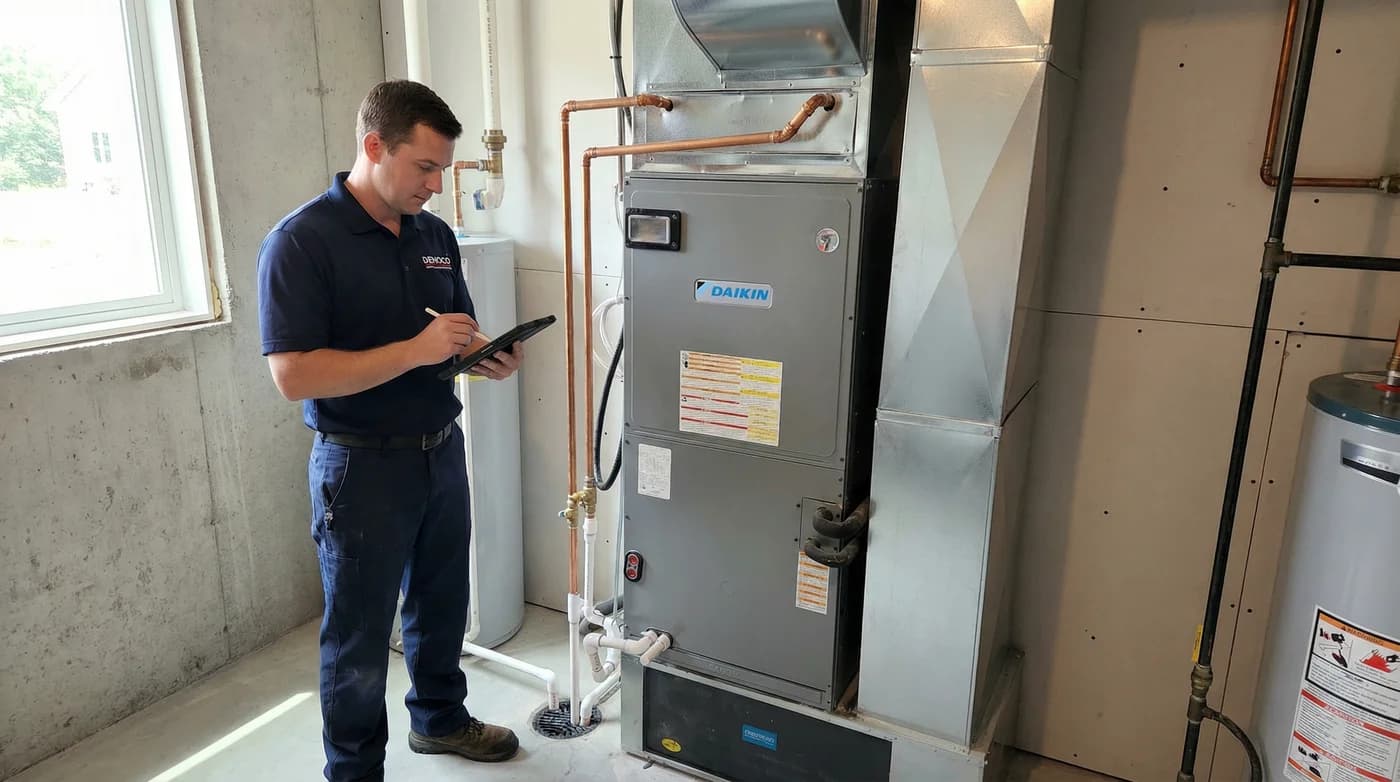
We install and service Daikin furnaces and other reputable brands. We choose equipment based on your home’s heat loss, duct constraints, comfort preferences, and budget — then we verify setup so performance matches the label, not just the sales sheet.
What should I do if my carbon monoxide (CO) alarm goes off?
Treat a CO alarm as an emergency. Get everyone to fresh air and follow local emergency guidance, then have the heating system inspected before running it again. CO events aren’t the time for resets or “wait and see” — safety comes first.
- Do not ignore alarms or repeatedly reset the furnace
- After the emergency is addressed, we can test combustion and inspect venting/system condition
Do I need a licensed gas technician for furnace work in Ontario?
Yes. Gas appliance installation and service in Ontario must be performed by appropriately licensed technicians and follow applicable safety and code requirements. If you’re comparing quotes, ask who is doing the gas-side work and what testing/documentation you receive at handoff.
Service gallery
What to expect
What “done right” looks like (repair or replacement)
- Combustion safety and venting verification — not “it fired, so we’re done.”
- Airflow and temperature-rise setup so the furnace delivers comfort without high-limit trips.
- A written handoff: what was found, what was changed, and what to watch next.
Annual maintenance that actually prevents breakdowns
- Condensate trap and drain check/cleaning (a common winter lockout cause).
- Ignition and flame-sensing verification, plus inducer/vent system condition checks.
- Airflow basics: filter fit/bypass, return-air restrictions, and temperature rise.
Cold-snap readiness (South-Eastern Ontario)
- Confirm intake/exhaust vent terminations stay clear in heavy snow and drifting conditions.
- Understand what’s “normal” (steam during certain cycles) vs what signals a real problem.
- Keep CO detectors current and treat alarms as emergencies — we prioritize safety-first guidance.
Questions homeowners ask
These are the real questions people ask before they call. If you want straight answers, you're in the right place.
- Why does my furnace keep turning on and off (short-cycling)?
- Short-cycling is usually a symptom, not a diagnosis. In South-Eastern Ontario we commonly see airflow restrictions (filter, return-air bottlenecks, plugged coil), incorrect setup (temperature rise out of spec), oversizing, or a safety limit tripping. The fix starts by confirming which limit is tripping and why — not “swap-and-hope.”
- Should I repair my furnace or replace it?
- Age matters, but failure type matters more. If the issue is recurring control lockouts, inducer/venting problems, or any heat-exchanger safety concern, replacement may be the safer long-term move. If it’s a single, well-defined component on a newer furnace, repair often makes sense. We’ll lay out options with realistic risk and lifecycle cost — not pressure.
- What should a proper high-efficiency furnace installation include in Ontario?
- Correct venting and condensate management, combustion safety checks, and verified airflow/temperature rise. “Same size as before” is not sizing — we want the home to be comfortable without loud airflow, high-limit trips, or wasted fuel.
- My carbon monoxide (CO) alarm went off — what should I do?
- Treat it as an emergency. Get everyone outside to fresh air and follow local emergency guidance (fire department / gas utility). Don’t reset and ignore it. Once you’re safe, we can inspect the venting, combustion, and furnace condition to identify the cause and document the fix.
- Two-stage vs modulating furnace: is the upgrade worth it in our climate?
- Often, yes — for comfort and quieter operation — but only when the duct system and control setup support it. We check airflow and static pressure first. A premium furnace can’t “outsmart” a duct system that can’t move air.
- Do high-efficiency furnaces freeze up or lock out in winter?
- They can if venting or condensate drainage wasn’t designed for Canadian winter realities. Nuisance lockouts often come from blocked vent terminations (snow/ice) or condensate drainage problems. We look at vent termination location, slope, drains/traps, and the full path — not just the furnace cabinet.
- Do you install Daikin furnaces?
- Yes. We install and service Daikin and other reputable furnace brands. We’ll recommend the right model based on your home’s heat loss, airflow limits, comfort goals, and budget — and we’ll document the setup so you’re not guessing later.