
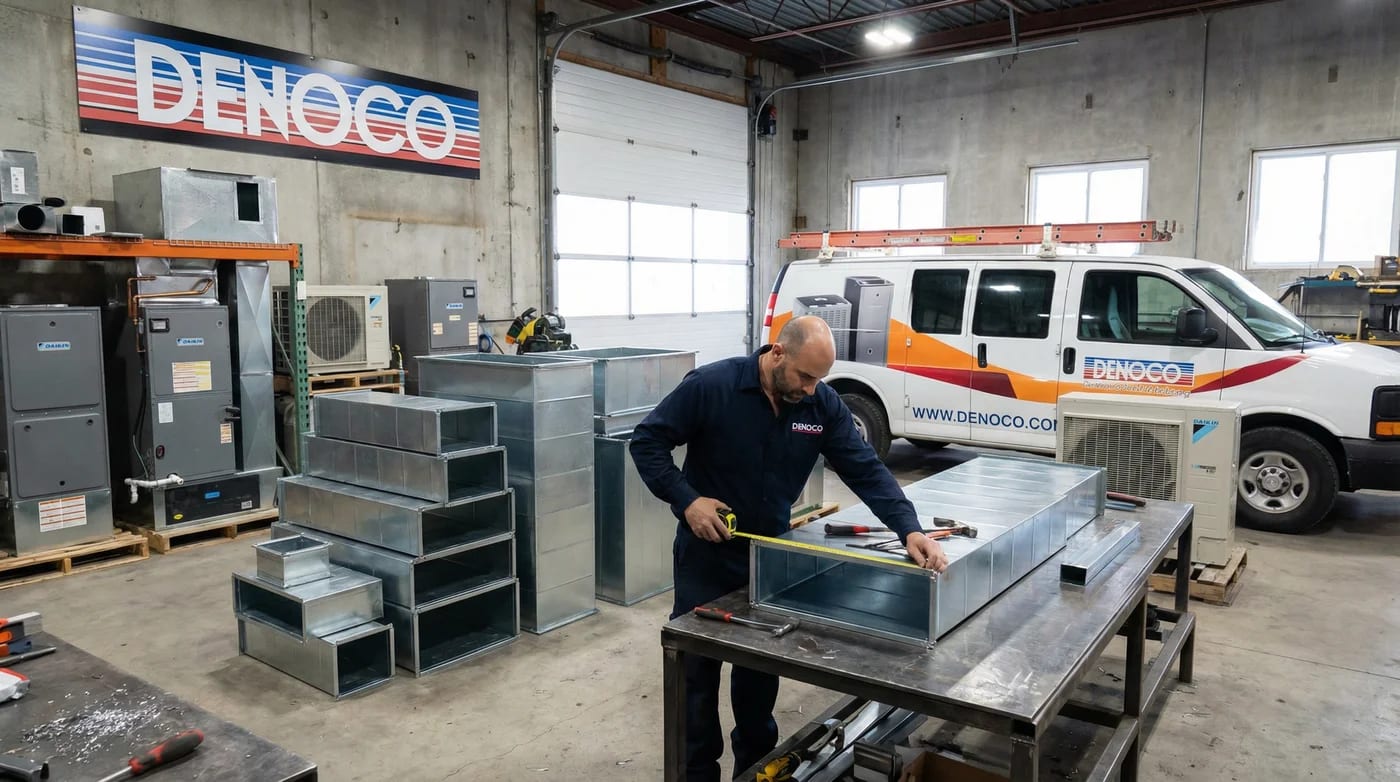
Ductwork & Sheet Metal
Custom duct design, fabrication, and upgrades for comfort and efficiency.
About this service
If some rooms are always hot/cold, the system is loud, filters clog quickly, or comfort never matches the thermostat, ductwork is often the bottleneck — not the furnace or AC.
We diagnose airflow and pressure first, then design and fabricate fixes that actually move the right amount of air to the right rooms. That can include sealing leaky joints, correcting return-air constraints, resizing runs, reworking transitions, and insulating ducts in unconditioned spaces to prevent heat loss and condensation.
Planning a heat pump? Duct constraints matter even more. We’ll confirm whether your existing duct system can carry the airflow a heat pump needs (quietly), and we’ll recommend the cleanest path forward if it can’t.
Common questions
How do I know ductwork is the real problem (not my furnace or AC)?
If you have hot/cold rooms, loud airflow, weak registers, or a system that “never catches up,” the equipment may be fine — but the duct system can’t deliver airflow where it’s needed. In South-Eastern Ontario, this shows up a lot in older homes, finished basements, and additions where ducts were extended without rebalancing.
- Big room-to-room temperature differences
- Whistling returns or loud supply vents
- Dusty rooms despite frequent filter changes
- Short-cycling or “high limit” trips tied to poor airflow
What does “static pressure” mean in plain English?
Static pressure is the resistance your blower is pushing against. When it’s too high, air delivery drops and noise goes up. High static can also shorten blower life and make heat pumps underperform. We measure it because it tells us whether the duct system can actually move the airflow the equipment was designed for.
What’s the best way to seal ducts — tape or mastic?
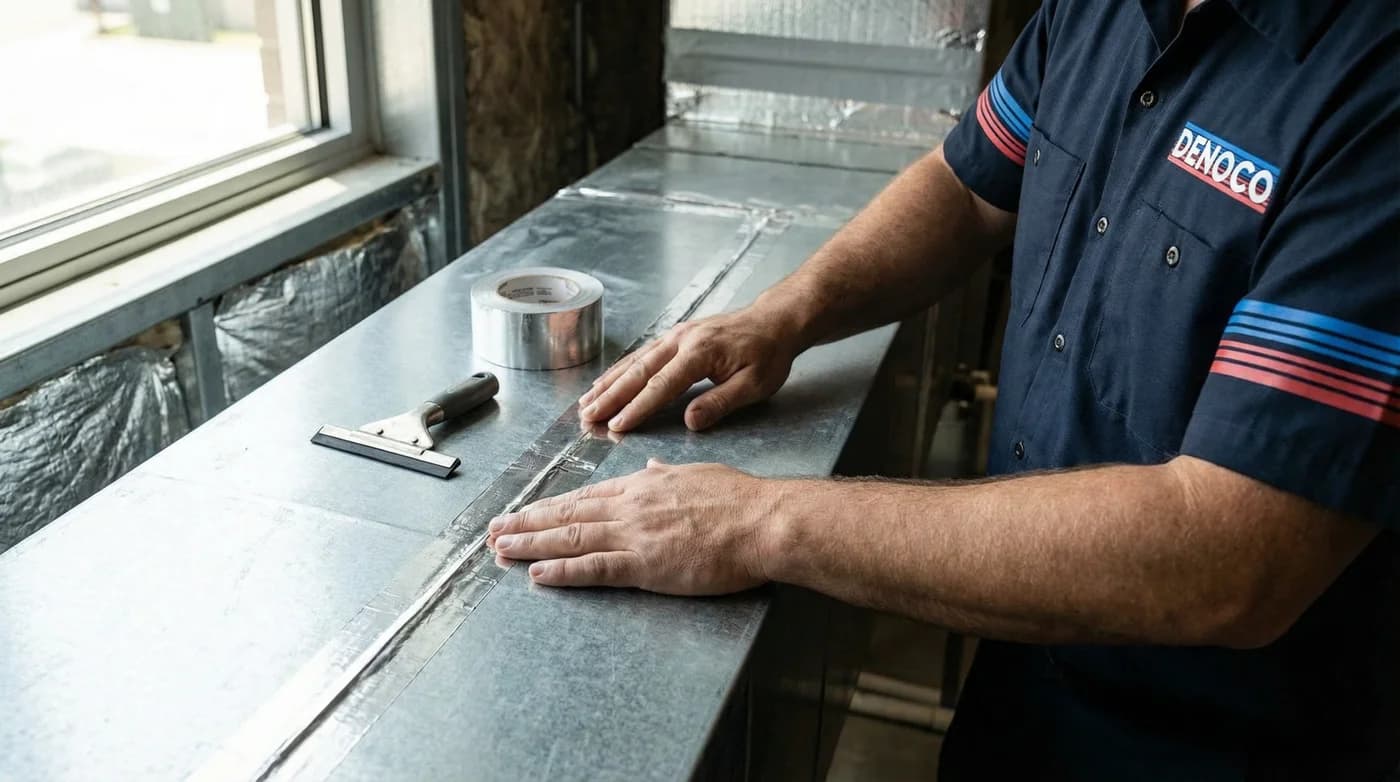
For long-term sealing, mastic (a brush-on sealant) is often the most durable approach on joints and seams. Where tape is used, aluminum foil duct tape or approved tapes are preferred; standard “duct tape” tends to fail over time. We choose the method based on location, temperature, accessibility, and longevity goals.
Do ducts in basements/attics need insulation in our climate?
Yes when they run through unconditioned or cool spaces. Insulating ducts helps reduce energy loss and can prevent condensation issues (especially on returns). We’ll check where the duct runs and recommend insulation and sealing together — insulating leaky ducts is a common mistake.
- Attics and vented crawlspaces: condensation risk and big heat loss
- Cool basements: comfort loss plus cold-metal condensation on returns
Heat pump retrofit: can my existing ducts handle it?
Sometimes — but duct constraints matter more with heat pumps because airflow requirements are often higher and comfort depends on steady delivery. Before recommending equipment, we verify the duct system can move the required airflow quietly and consistently, and we propose targeted duct changes if it can’t.
Service gallery
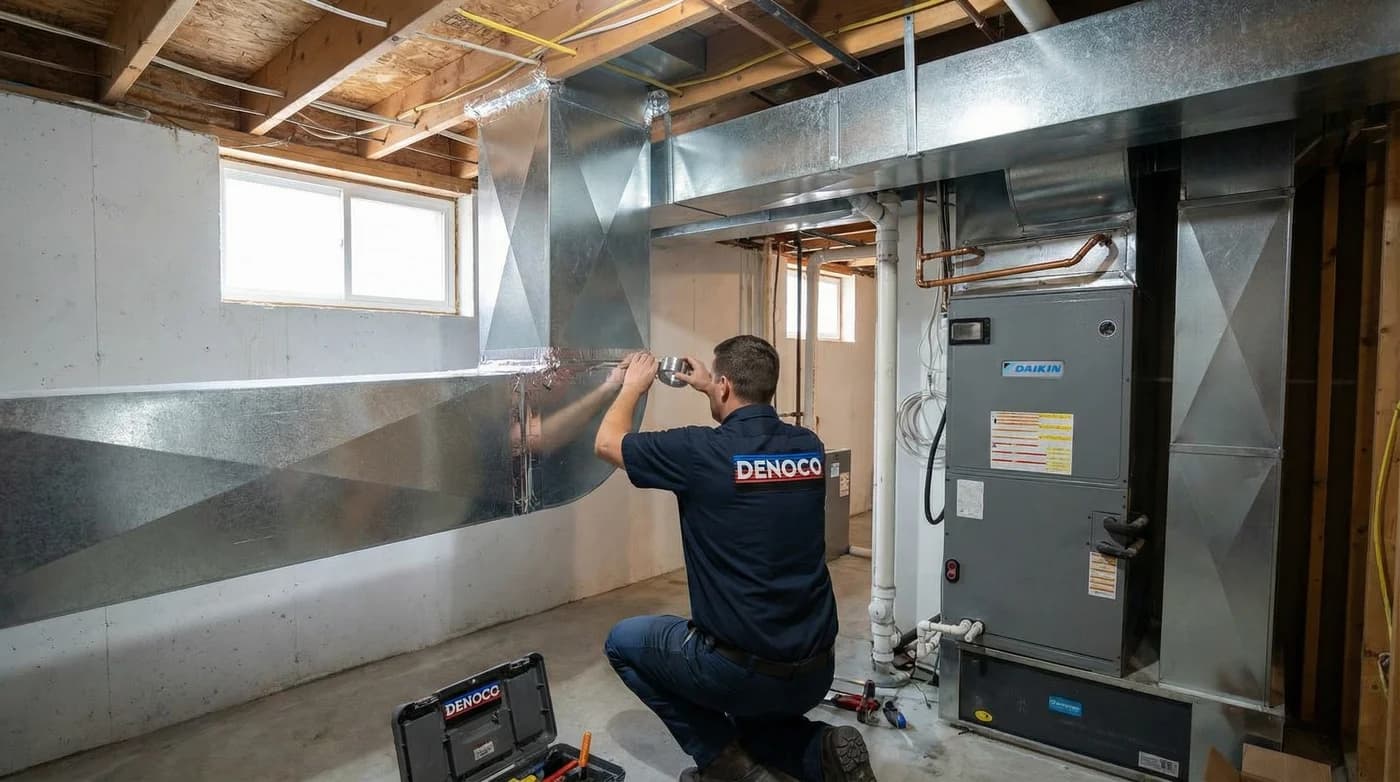
What to expect
Our ductwork assessment (what we measure before recommending changes)
- Static pressure and airflow symptoms — to locate the real restriction
- Supply vs return constraints (returns are often the hidden bottleneck)
- Flex duct length/bends and transition quality
- Leak points and whether sealing should happen before any “equipment upgrade”
- Where ducts run through unconditioned spaces (condensation/heat loss risk)
Common fixes that actually move the needle
- Seal joints and seams (mastic/approved tapes) before insulating
- Add or resize return air paths for quieter, stronger delivery
- Replace restrictive transitions and crushed/over-bent flex
- Resize runs where airflow is physically impossible with the existing duct
- Insulate ductwork in unconditioned spaces to reduce heat loss and condensation
Heat pump readiness (ducted systems)
- Confirm the duct system can carry required airflow without loud noise
- Identify rooms that will lag without duct changes (long runs, poor returns)
- Plan upgrades so the equipment performs as designed — not “installed and hoped for.”
Questions homeowners ask
These are the real questions people ask before they call. If you want straight answers, you're in the right place.
- Why are some rooms always hotter or colder?
- Most often it’s airflow delivery: undersized runs, missing returns, restrictive grilles, long flex with sharp bends, or poor balancing. We diagnose the constraint and fix the distribution — not just the thermostat.
- My vents whistle or the return is loud — what causes that?
- Noise usually means high static pressure (the blower is fighting restriction). Common causes are undersized returns, restrictive filters/grilles, crushed flex, or poor transitions. Fixing the bottleneck is usually more effective than trying “quieter” grilles.
- Is duct cleaning the fix for dust?
- Sometimes cleaning helps after renovations or if there’s visible contamination — but many “dust” complaints are actually leakage (pulling air from basements/attics) or filtration bypass. We look for root cause before selling cleanings.
- Should I seal ducts with duct tape?
- Standard cloth/vinyl duct tape often fails over time. We typically use mastic on seams/joints and, where tape is appropriate, aluminum foil duct tape or approved sealing tapes based on location and temperature.
- Do you insulate ducts in basements or attics?
- Yes when ducts run through cool or unconditioned spaces. Insulation reduces heat loss and can prevent condensation, but it only works well when leaks are sealed first.
- Can you add return air to fix comfort?
- Often, yes. Missing or undersized returns are a common reason for weak airflow, noisy systems, and comfort imbalance. We’ll propose the least invasive path that still fixes the constraint.
- Can you balance airflow without tearing out drywall?
- Sometimes. We start with measurements, damper adjustments, grille choices, and accessible duct changes. If the core constraint is inside finished spaces, we’ll show options with “least disruption first.”
- How do HRVs/ERVs interact with ductwork?
- Ventilation systems can tie into ductwork in different ways. The important part is keeping airflow and pressure under control so ventilation improves air quality without creating comfort or humidity problems.
- What are signs of leaky ducts?
- Dust streaks at seams, temperature loss, comfort complaints that don’t match equipment size, and musty smells (especially when the blower runs) can all point to leakage. We confirm with inspection and measurements.
- How long does a ductwork project take?
- Small fixes (sealing, a return add, a few transitions) can be a day. Bigger redesigns take longer depending on access and finishes. We’ll outline scope and disruption before work begins.