Denoco Energy Systems
Menu
ServicesLocationsAboutBlogCareersGalleryFAQContactAlready know your branch? Use the numbers below.Smiths Falls: (613) 283-0574Kingston: 613-777-5475

This service is delivered from our Kingston branch.

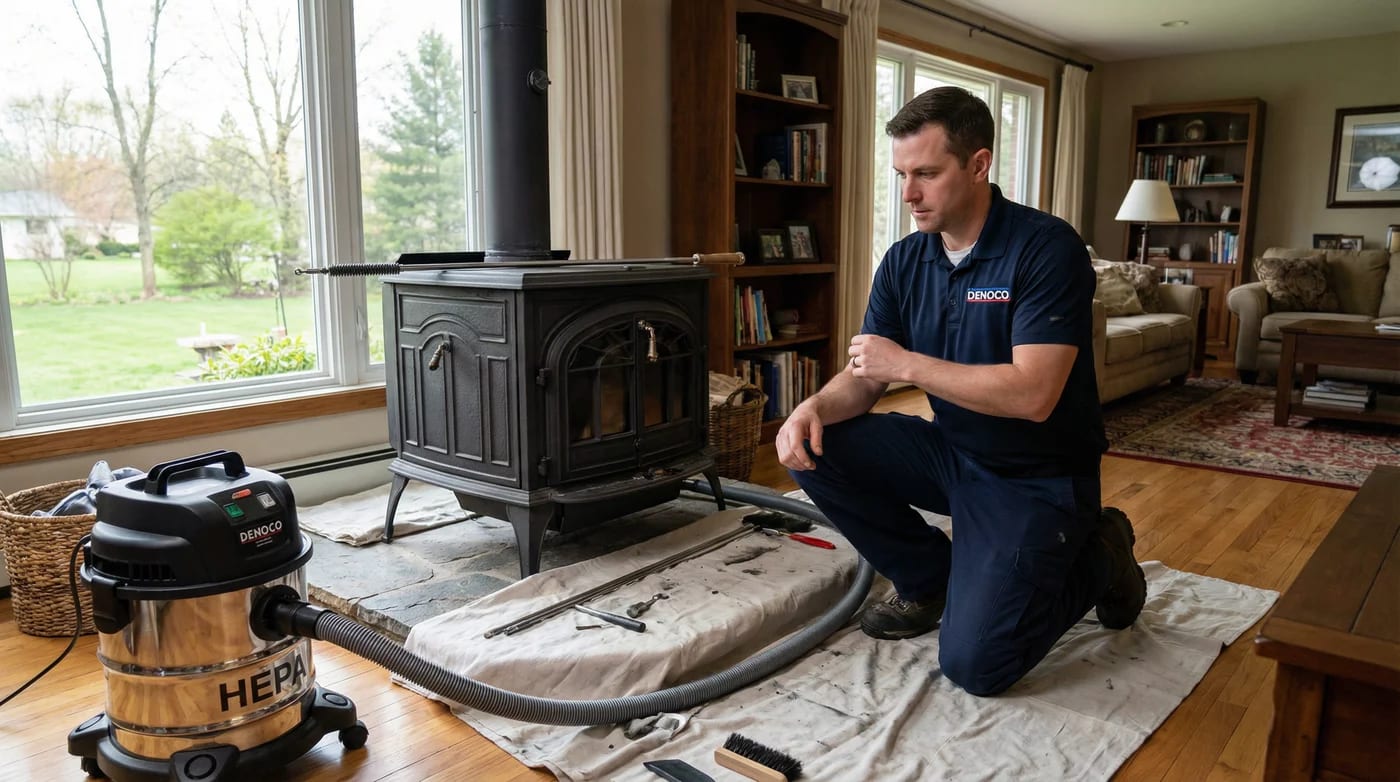
Denoco chimney sweeping technician setting up containment and equipment for a wood stove service in South-Eastern Ontario

Chimney Sweeping in South-Eastern Ontario (Kingston branch)

A proper sweep isn’t just “running a brush.” It’s containment-first cleaning plus a safety-minded inspection and clear documentation, so you know what’s normal, what’s risky, and what to fix before you light another fire.

What is chimney sweeping (and why it matters in Ontario)?

Chimney sweeping is the process of removing soot and creosote from the flue and connector so smoke and combustion gases can vent reliably. In South-Eastern Ontario, long heating seasons and shoulder-season “smolder burns” can accelerate buildup—especially when wood is damp or draft is weak.

Municipal fire departments regularly emphasize inspection and cleaning as part of chimney fire prevention because creosote is combustible and chimneys can also develop blockages or damage. Sweeping reduces fuel for ignition and gives you a chance to catch draft blockers, water entry, and visible defects early.

How often should you sweep a chimney in South-Eastern Ontario?

Yearly is the baseline for most wood-burning systems. If you heat primarily with wood, burn daily, or notice slower draft or heavier soot, you may need a mid-season check—because real-world usage matters more than a calendar.

A practical homeowner rule-of-thumb

  • Annual sweep + inspection: typical for regular burners
  • Mid-season check: if you burn daily through winter or see heavy deposits
  • After changes: new insert, liner, roof work, cap changes, or recurring smoke spillage

Timing tip: booking in spring/summer can be easier than the fall rush, and it gives time to address repairs before cold weather returns.

What is creosote—and why is it a chimney fire risk?

Creosote is a residue from wood smoke that can condense inside cooler chimney surfaces. It builds fastest when fires smolder (low air), the chimney is cold (exterior stacks), or wood is wet. If deposits ignite, chimney temperatures can spike and damage liners, mortar joints, and nearby combustibles.

That’s why “clean” matters, but so does “why it got dirty.” During a visit, we connect what we find to burn practices and draft conditions—so your next season runs cleaner.

Why do Ontario homes get smoke spillage and poor draft?

In cold snaps, draft can be unstable if the chimney is short, exterior and uninsulated, partially blocked, or competing with exhaust fans and tight building envelopes. The result is slow startup, smoke smell, or glass that blackens quickly.

  • Wet wood: harder to light, cooler flue gases, more deposits
  • Cold exterior chimney: slower to establish draft
  • Negative pressure: range hood / bath fans pulling air downward
  • Venting mismatch: connector sizing/layout not suited to the appliance

Carbon monoxide (CO) safety: what homeowners should do

Any fuel-burning appliance can produce carbon monoxide if combustion or venting is compromised. The simplest protection is working CO alarms, plus keeping vents and chimneys clear so combustion gases reliably exit the home.

We recommend following official indoor air and wood-smoke guidance and keeping CO alarms in the locations required by code (near sleeping areas and fuel appliances). If you smell smoke indoors, see soot streaking, or a CO alarm triggers, stop using the appliance and get it checked.

What should a professional chimney sweep include?

A professional visit should protect your home, remove deposits, and leave you with clear next steps. That means containment, an inspection mindset, and a written summary—so you’re not guessing later.

Containment & housekeeping

  • Drop cloths and controlled vacuuming around the hearth
  • Dust/soot kept out of living spaces
  • Respect for finishes, flooring, and air quality

Cleaning + visual inspection

  • Creosote/soot removal from accessible sections
  • Notes on draft blockers (caps, nests, heavy deposits)
  • Clear explanation of what’s normal vs concerning

Documentation you can use

  • Written summary of work performed
  • Photos when accessible and relevant
  • Recommendations that are specific and actionable

If your insurer or buyer specifically needs a WETT report, book a WETT inspection so the scope and documentation match the request.

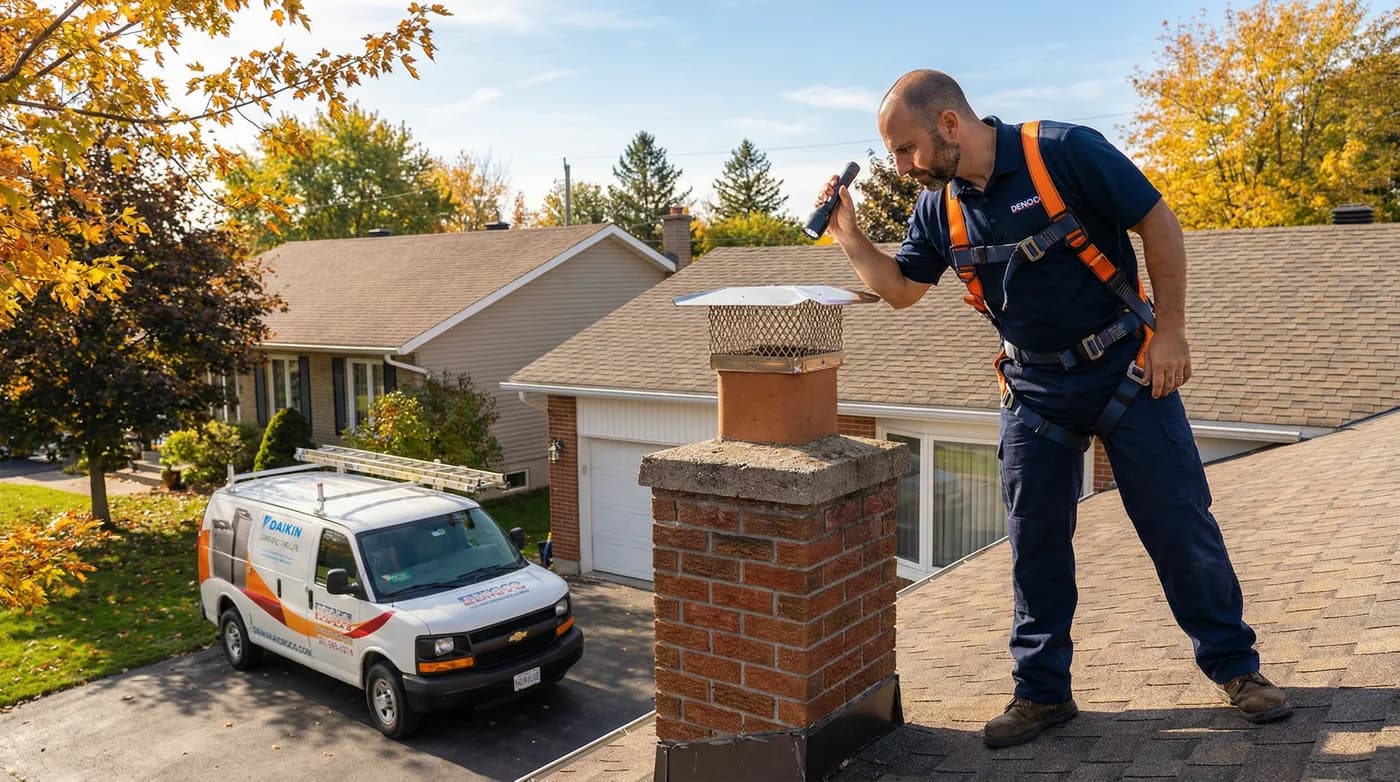
Denoco technician inspecting a chimney termination and cap on a South-Eastern Ontario home
Chimney top checks help catch draft blockers, cap damage, and water-entry issues before the heating season.
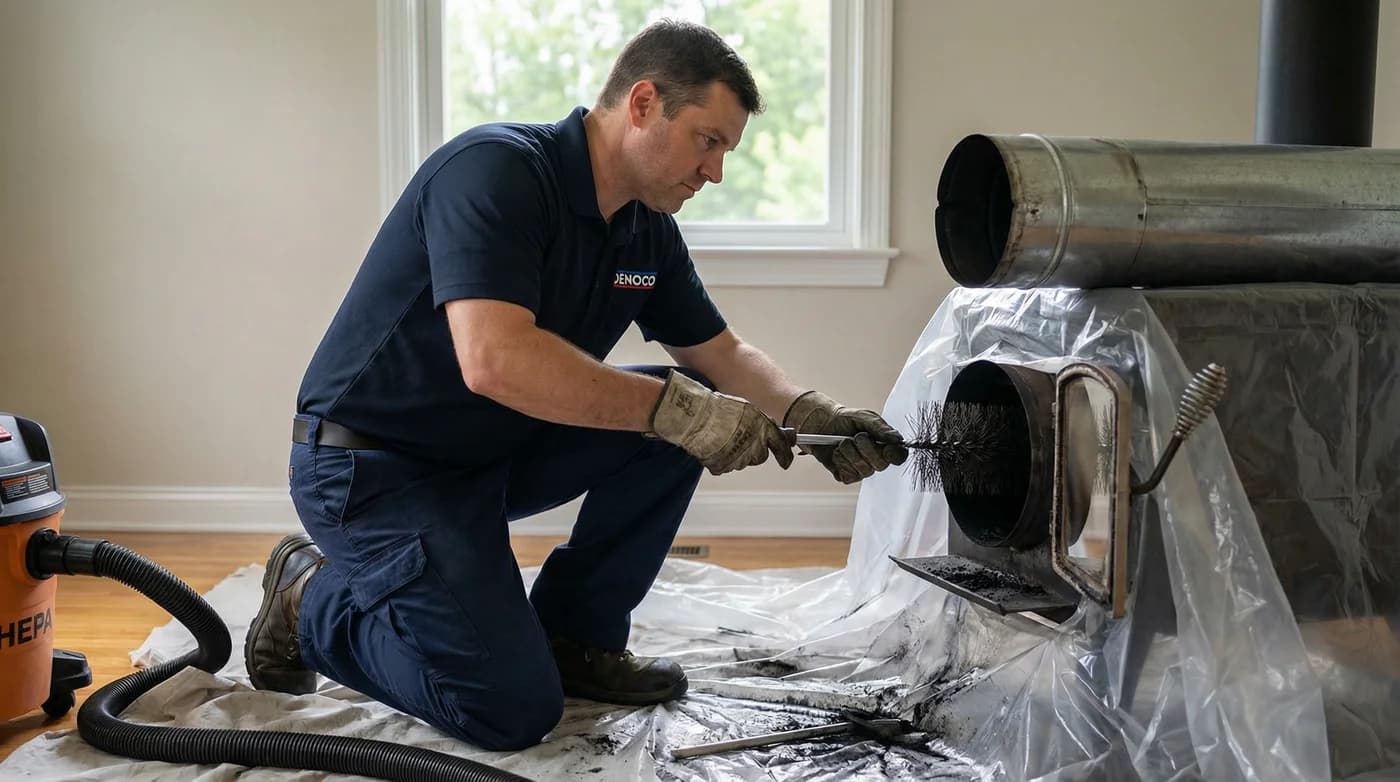
Close-up of containment-first chimney sweeping and inspection at a wood stove cleanout
A proper sweep is cleaning plus observation: what we remove and what we see guides safer burning and next steps.

Homeowner checklist: how to burn cleaner and reduce creosote

The fastest way to reduce creosote is better combustion: dry wood, enough air, and a hot startup that warms the flue quickly. Health Canada recommends using properly dried, seasoned wood and avoiding materials that create toxic smoke.

  • Burn seasoned wood: split/stack to dry and avoid wet wood that smolders and deposits more residue.
  • Get a hot start: establish draft before turning air down.
  • Avoid “overnight smolder” burns: they trade convenience for heavy deposits.
  • Watch for symptoms: smoke smell, black glass, sluggish draft, or visible flakes are your early warnings.

What to ask when comparing chimney sweeping companies

A low price isn’t a deal if the company skips containment, doesn’t inspect, or can’t document findings. Ask questions that reveal process, not marketing.

  • Scope: Is this sweeping only, or sweeping + inspection + documentation?
  • Containment: What do you do to control soot/ash indoors?
  • Reporting: Will I receive a written summary and photos?
  • Credentials: If I need insurance/resale documentation, can you provide a WETT inspection report?
  • Guidance: Will you tell me what burn habits are causing the buildup you found?

Questions homeowners ask

How often should I get my chimney swept in South-Eastern Ontario?

Annual sweeping and inspection before the heating season is a common baseline. If you heat primarily with wood, burn daily, or have symptoms like slower draft, smoke spillage, or heavier deposits, you may need a mid-season check. We’ll recommend a realistic interval based on what we actually see in your flue and connector.

What’s the difference between a chimney sweep and a chimney inspection?

Sweeping is the cleaning step: removing soot and creosote from the flue and connector. An inspection evaluates the system’s condition and safety signals (draft, clearances, liner condition where visible, cap/termination issues, and obvious defects). In practice, good chimney service is both: clean + verify + document.

Can creosote really cause a chimney fire?

Yes. Creosote is a combustible residue from wood smoke that can accumulate in the flue—especially when fires smolder, wood is wet, or draft is weak. If deposits ignite, a chimney fire can damage liners, mortar joints, and nearby combustibles. Sweeping reduces the fuel available for ignition and gives you a chance to catch defects early.

What are signs I should book sooner than my usual schedule?

Book sooner if you notice: smoke smell or spillage when lighting, sluggish draft, a lot of soot/flakes, black glass that returns quickly, or you’ve made changes (insert/liner swap, cap work, roof work). Also book if the system sat idle for a long time or you’re unsure when it was last cleaned.

Do wood stove inserts and stainless liners still need sweeping?

Yes. Inserts and stainless liners can actually concentrate deposits because the flue area is smaller and flue gases cool differently. Frequency depends on usage and burn quality; after the first cleaning, we can recommend an interval based on how quickly your system accumulates deposits.

Why is my stove glass turning black and my room smells smoky?

Black glass and smoke smell usually point to combustion and draft issues: wet wood, shutting air down too early, a cold exterior chimney, negative pressure (kitchen/bath fans), or a venting mismatch. Sweeping helps, but the “why” matters—our goal is to connect what we see to how your system is operating so you can burn cleaner and safer.

Does chimney sweeping include a WETT inspection report for insurance?

Not automatically. Sweeping focuses on cleaning and a safety-minded visual check of accessible components. If your insurer or buyer specifically needs a WETT report for a wood appliance, book a WETT inspection so the inspection level and documentation match their request.

Will you provide documentation for insurance or resale?

Yes. After service, we can provide a written summary of what was done and what was observed. If you need an insurance-focused assessment, you may also want a WETT inspection report—see our WETT inspection service for that specific scope and paperwork.

How long does a chimney sweeping appointment take?

It depends on access, system complexity, and how much buildup is present. Most standard visits are designed to be efficient, but our priority is doing it cleanly (containment) and safely (inspection mindset). We’ll confirm expectations when booking so you know what the visit will involve.

What should I do before the technician arrives?

Clear access to the stove/fireplace area and any cleanouts. Move breakables from the hearth/mantel area, keep pets secured, and have any notes about recent changes handy (liner/cap work, stove swap, roof work). If you’ve had smoke spillage or draft issues, tell us when it happens — those patterns help diagnosis.

Standards and guidance can change. These links go to official sources so you can confirm the current wording and recommendations.