
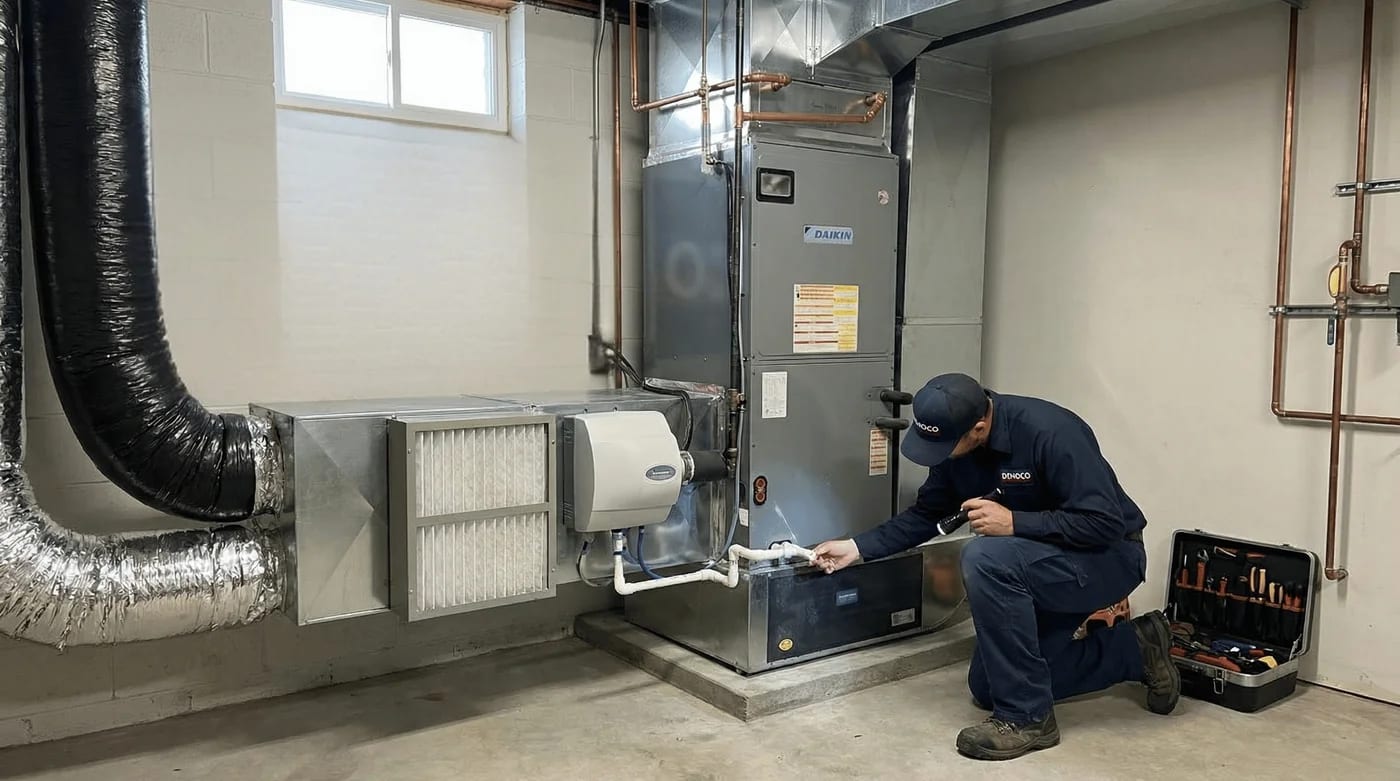
Air Quality & Humidification in Yarker, ON
Premium work with honest diagnostics, clear scopes, and documentation you can keep. We route service by postal code and service type — your primary coordination branch is Kingston.
About this service in Yarker
Humidity, filtration, and ventilation sized for South-Eastern Ontario winters — without choking your furnace or heat pump.
Common questions
What indoor humidity is realistic in South-Eastern Ontario winters?
Many homes are comfortable around roughly 30–50% relative humidity in winter, but the “right” number depends on outdoor temperature, window quality, and how tight your home is. If you see water on glass or sills, humidity is too high for those surfaces — turn the humidistat down and improve air movement before mold gets a foothold. We set targets you can live with, not a single number on a sticker.
- Use a simple hygrometer in the rooms you care about most
- Window condensation means reduce humidity or address cold surfaces/ventilation
- Sustained damp on sills or corners is a mold risk — act early
Whole-home humidifier: bypass, fan-powered, or steam — what’s the difference?
Bypass units are common and economical; fan-powered models move more moisture when airflow or duct layout is tight; steam humidifiers add a lot of water quickly but need robust electrical, drainage, and maintenance. The best type is the one that matches your heat source, duct static pressure, water quality, and how much humidity you actually need.
Will a higher MERV or HEPA filter help — and can it hurt my system?
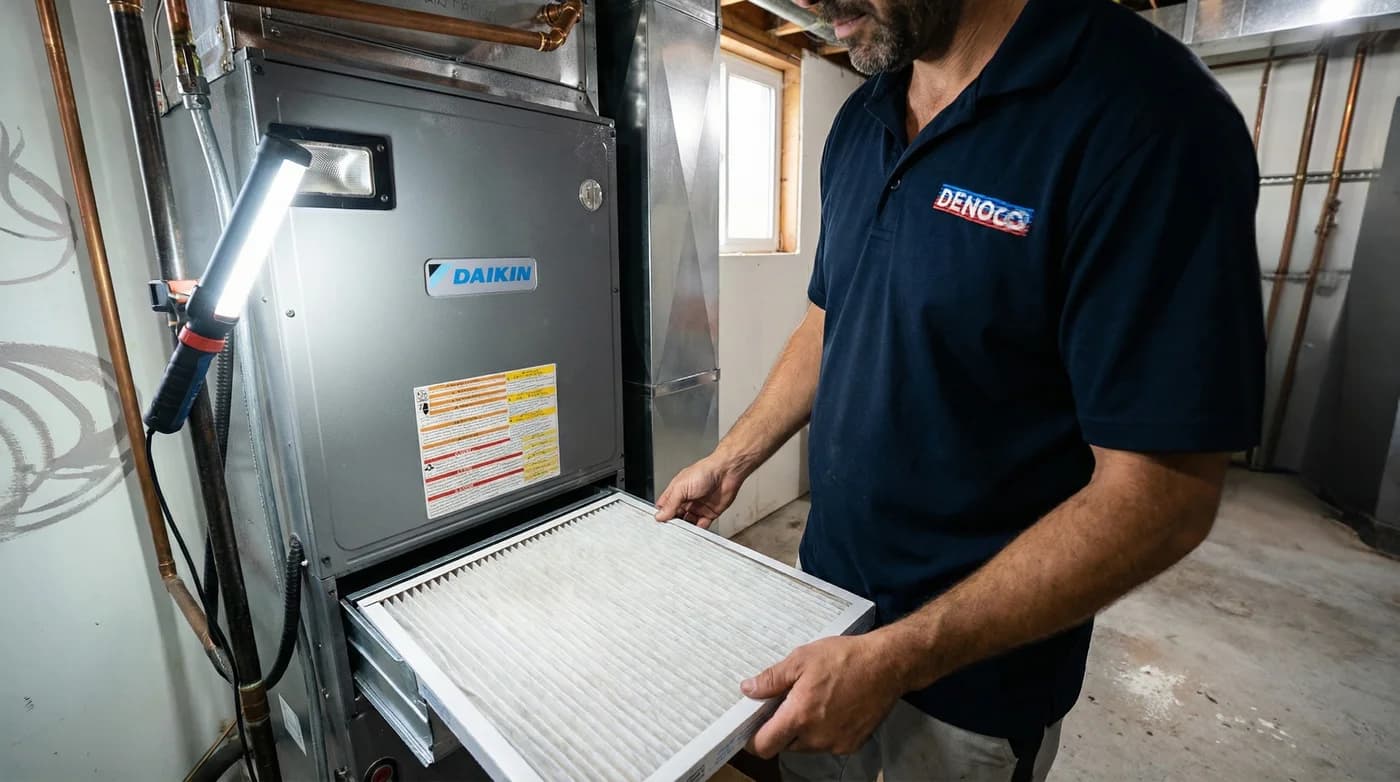
Finer filters catch smaller particles but add resistance. On marginal duct systems or heat pumps that need every CFM, the wrong filter can raise static pressure, increase noise, and reduce comfort. We match filter class to measured or estimated airflow headroom — or we fix duct constraints first.
- Media air cleaners (thick cartridge) vs thin pleats: different pressure curves
- Heat pumps and high-static furnaces are less forgiving of “filter upgrades”
- Particle capture only works if air actually passes through the filter (no bypass)
HRV vs ERV for Ontario homes — how do we choose?
Both deliver controlled fresh air in tight, efficient homes. HRVs focus on heat recovery between exhaust and incoming air. ERVs also transfer moisture between airstreams, which can matter for summer humidity and how dry incoming winter air feels — depending on how you run the system and how tight the envelope is. We pick based on your moisture patterns, not a one-size-fits-all rule.
Why does my house feel stale if I already upgraded the filter?
Filters treat particles; they don’t replace ventilation. Stale air, cooking odours, and high CO₂ in occupied rooms often point to insufficient outdoor air change or poor mixing — especially in well-sealed retrofits. The fix may be ventilation strategy, balancing, or runtime — not a thicker pleat.
How much does air quality and humidification work cost in South-Eastern Ontario?
A straightforward humidifier install on an accessible furnace is a different project than adding ventilation, rewiring for steam, or correcting duct pressure before filtration upgrades. We quote after confirming access, electrical, drain paths, and whether your system can handle the add-ons without side effects.
- Humidifier type (bypass vs fan-powered vs steam) and electrical/drain scope
- Filtration: cabinet/media upgrade vs simple MERV change
- Ventilation: new HRV/ERV vs integrating with existing ducting
Pricing varies by home and scope. We confirm details before starting work.
How long does installation take?
Many humidifier and media-cleaner installs finish in part of a day once parts are on hand. HRV/ERV projects take longer when coring, controls, and balancing are involved. We’ll give you a realistic schedule before we book — including any electrical or sheet metal prerequisites.
Who benefits most from professional IAQ and humidification?
Families fighting dry winter air, static, wood floors that shrink, or nose/throat irritation; homes with new tight construction that need controlled ventilation; allergy-prone households that need filtration matched to airflow; and anyone who tried retail gadgets without fixing the HVAC system underneath.
Do humidifiers need maintenance — what goes wrong if I skip it?
Pads, steam canisters, and drain lines need seasonal attention. Standing water, neglected pads, and plugged drains are how biological growth and musty smells start — sometimes in the duct system. We show you what to monitor and offer maintenance that matches the equipment you own.
What should I ask when comparing IAQ quotes?
Ask for written targets: design humidity range, filter pressure-drop expectations, and how ventilation runtime will be controlled. Ask what gets verified at startup (humidity reading, drain flow, basic static awareness). Avoid one-line quotes that don’t mention drains, electrical, or maintenance — that’s where cheap installs fail.
- Humidifier type + drain + electrical scope in writing
- Filtration: model, MERV/media class, and expected change interval
- Ventilation: balanced flows and homeowner control explanation
Service gallery
Air Quality & Humidification FAQ
Straight answers for homeowners in Yarker.
- What humidity should my home be in winter in Ontario?
- A common comfort band is about 30–50% relative humidity, but it must match your windows and outdoor temperatures. If condensation forms on glass or frames, lower the humidistat — persistent wet surfaces support mold. We tune to your house using a hygrometer and visual checks, not a single “set and forget” number.
- Why are my windows sweating after I added a humidifier?
- Sweating means the indoor air is holding more moisture than cold window surfaces can tolerate. Either humidity is too high, windows are colder than ideal, or air isn’t circulating enough at the glass. Fix is usually lowering humidity, improving circulation, or addressing cold bridging — not adding more moisture.
- Will a whole-home humidifier fix dry air everywhere?
- It can even out moisture when tied to a ducted system that runs enough in winter. Rooms far from ducts, very leaky envelopes, or homes with minimal blower runtime may still feel dry. We assess duct paths, runtime, and whether a portable supplement is needed for specific zones.
- Are portable humidifiers a bad idea?
- They’re fine for spot use if cleaned diligently. Ultrasonic and impeller types can disperse minerals and microbes if tanks aren’t cleaned and water isn’t appropriate. Whole-home units integrate with drainage and controls — but still need pad or steam maintenance. We’ll be straight about which approach fits your lifestyle.
- Do high-MERV or HEPA filters always improve air quality?
- They capture more particles per pass — if air moves through them properly. Too aggressive a filter on a weak duct system can cut airflow, increase noise, and hurt heating or heat-pump performance. We size filtration to your blower and duct reality, sometimes after a quick pressure sanity check.
- How often should I change furnace filters or humidifier pads?
- Filter intervals depend on MERV, pets, renovation dust, and runtime — often roughly one to three months for standard pleats, but follow what we document for your exact model. Humidifier pads or steam cylinders are typically seasonal or per manufacturer; neglected pads restrict water flow and can smell.
- Is an HRV or ERV better for my house?
- HRVs recover heat from exhaust air while bringing in fresh outdoor air. ERVs also exchange moisture between streams, which can help manage summer humidity and moderate how dry ventilation air feels in winter, depending on the home. Tight new builds and heavy retrofits often need one or the other — we match equipment to your envelope and how you live.
- Can wildfire smoke affect indoor air in Eastern Ontario?
- When outdoor smoke is elevated, keeping windows closed and using filtration matched to fine particles helps. MERV-13-class media (when the system can handle it) or standalone HEPA devices in occupied rooms are common strategies. We focus on what your HVAC can sustain without breaking airflow — plus practical habits during smoke events.
- Why does my house feel stuffy even with a “good” filter?
- Particles are only one piece. Stuffy air often means too little fresh air change, poor return paths, or high occupancy without ventilation. Upgrading filtration without addressing ventilation can mask symptoms. We look at the whole system: supplies, returns, HRV/ERV if present, and blower runtime.
- Do UV lights or electronic air cleaners solve IAQ problems?
- They can play a role in specific cases, but they’re not a substitute for filtration, moisture control, and ventilation. Effectiveness depends on placement, intensity, runtime, and what problem you’re actually solving. We recommend them when the engineering case is clear — not as a default upsell.