
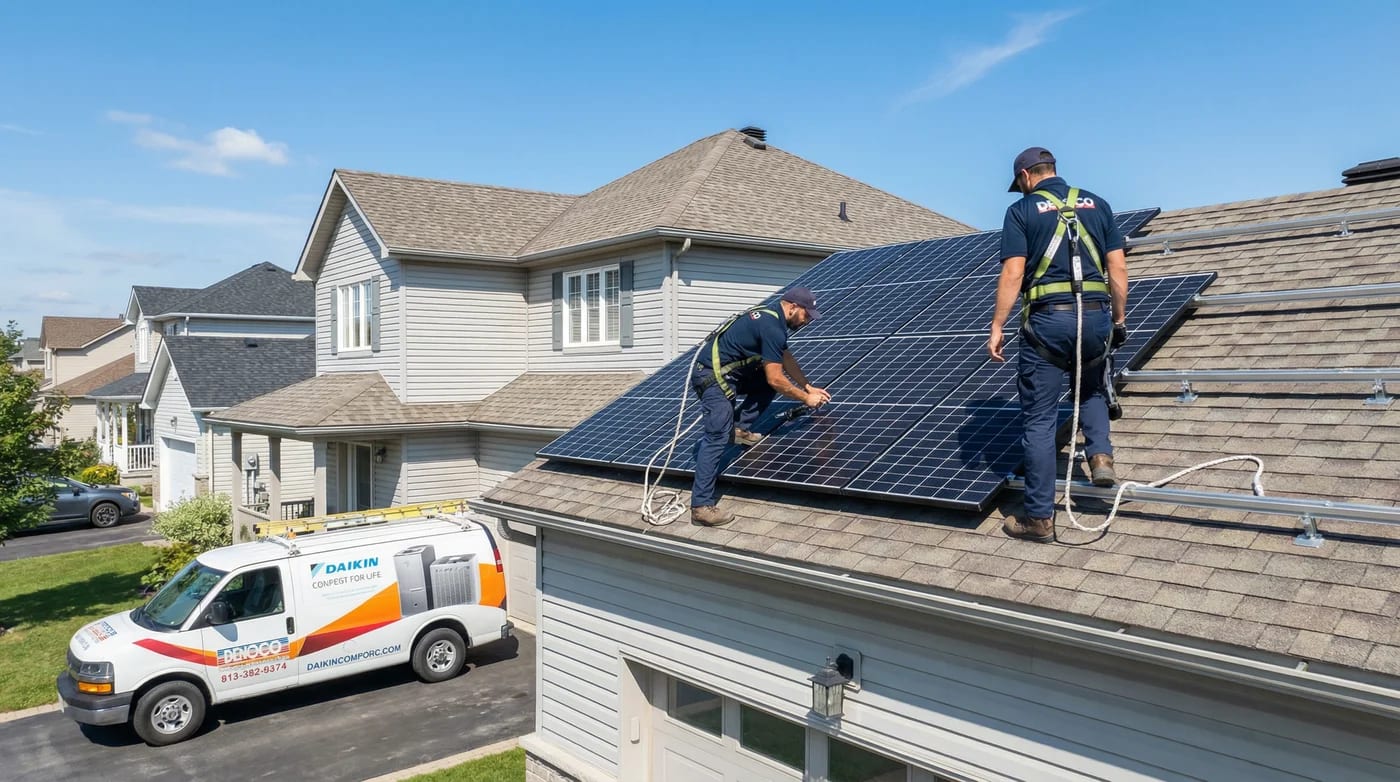
Solar Panel Systems in Wolfe Island, ON
Premium work with honest diagnostics, clear scopes, and documentation you can keep. We route service by postal code and service type — your primary coordination branch is Kingston.
About this service in Wolfe Island
Grid-tied (net metering) and off-grid solar designed for real winter production and clear payback.
Common questions
Is solar worth it in South-Eastern Ontario?
It can be — when the design matches your roof or site, your usage profile, and the real constraints that determine production: shading, orientation, and winter snow. We model conservative production and explain what solar will and won’t cover so you’re not buying a best‑case spreadsheet.
- Best fit: clear sun, solid roof, and a usage profile that can absorb production
- Common blockers: heavy shading, poor roof condition, unrealistic winter expectations
- Light commercial: daytime load often improves self-consumption and ROI
How does net metering work in Ontario (high level)?
Net metering is the grid-tied approach where your solar production offsets your electricity use over time through credits on your utility bill. The practical steps typically include a design, an interconnection review with your local utility, and an electrical inspection before permission to operate. We handle the paperwork path and set expectations for timeline and approvals.
- Design around annual usage (12 months of bills) and site constraints
- Utility interconnection review + required safety equipment
- Inspection and commissioning before the system is turned on
Net metering rules and utility processes can change and vary by utility. We confirm current requirements during quoting.
Rooftop vs ground-mount: which is better here?
Rooftop is often the simplest when the roof is in good shape and shading is minimal. Ground-mount can be better on rural properties where you can choose the tilt and orientation more freely, keep panels accessible for service, and manage snow shedding. The right choice is the one that produces reliably without creating roof or maintenance headaches.
- Rooftop: efficient use of space; roof condition and layout matter
- Ground-mount: better access + tilt control; needs land and trenching considerations
- Either way: shading analysis is non-negotiable
What should I expect from solar production in winter in Eastern Ontario?
Winter production is real but lower: shorter days, a low sun angle, and snow cover reduce output compared with summer. The goal is to design for annual performance and reliability, not to promise winter peaks. We discuss snow-shedding tilt, safe access, and whether battery backup is part of your winter reliability plan.
- Snow cover and shading are the biggest winter production killers
- Tilt and layout choices can improve snow shedding and shoulder-season output
- Batteries help with backup; they do not “create” winter energy
Off-grid vs grid-tied + battery: what should I choose?
True off-grid is a lifestyle and load-management decision: you size for autonomy, accept generator integration, and prioritize critical circuits. For most homes in South-Eastern Ontario that have grid access, grid-tied solar with optional battery backup is usually the better mix of cost, convenience, and reliability — especially when outages are the concern, not remote access.
- Off-grid: critical loads, battery autonomy targets, and generator plan are mandatory
- Grid-tied + battery: good for outage resilience without full off-grid complexity
- Hybrid planning: we define what stays on during an outage (and what doesn’t)
What size solar system do I need for a home or small business?
Most systems start with your last 12 months of electricity use and the usable roof/site area. Many homes land in the single‑digit to low‑teens kW range, while light commercial sites vary widely based on daytime load, roof area, and expansion plans (EV charging, heat pumps). We size for the meter, the site, and your next 3–5 years — not just today.
Are there Ontario incentives for solar in 2025–2026?
Incentives and programs evolve. Current Ontario planning and program materials have included support for certain solar sizes and behind‑the‑meter generation programs. We’ll point you to current official program pages and help you understand what documentation and equipment classes typically matter — without promising a rebate we can’t verify.
Program eligibility and funding can change. Confirm current terms before purchase.
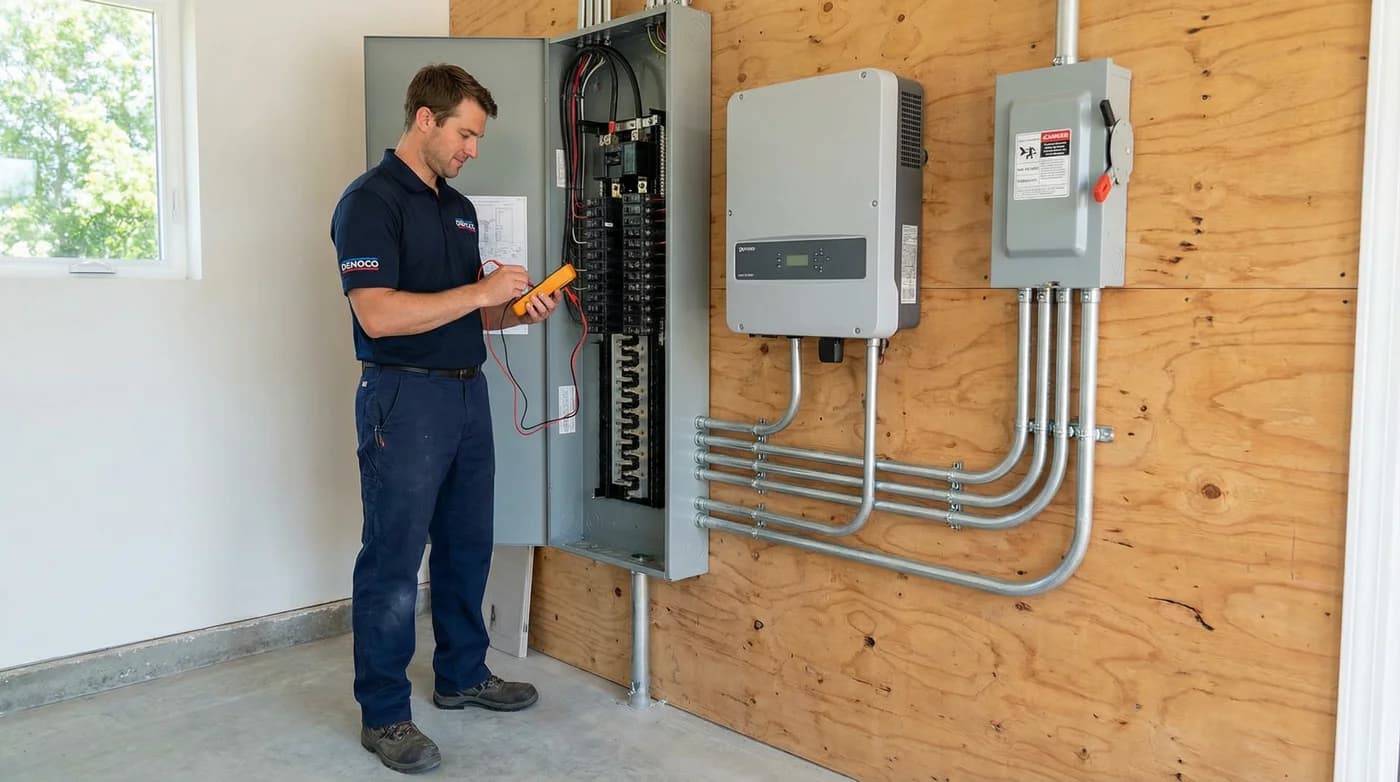
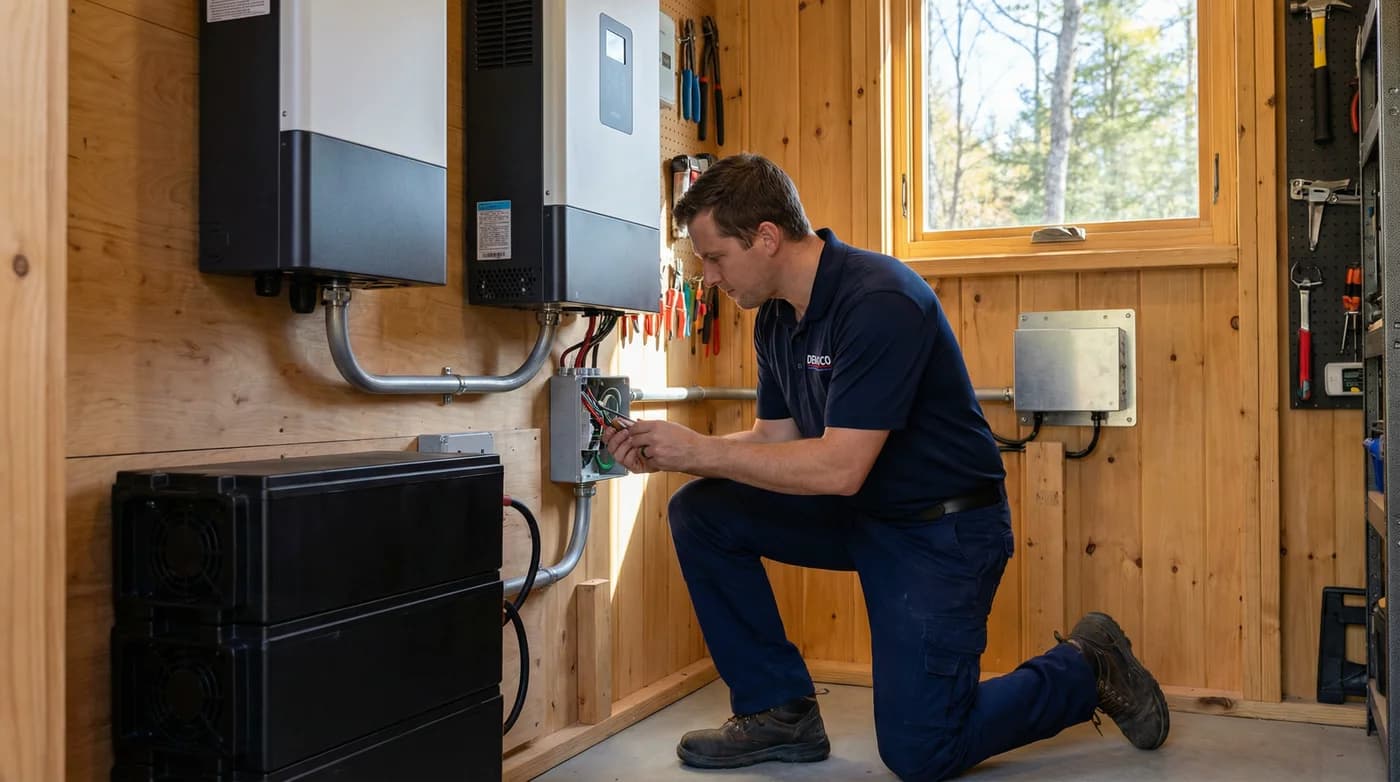
Service gallery
Solar Panel Systems FAQ
Straight answers for homeowners in Wolfe Island.
- Will solar work on my roof if it’s not perfectly south-facing?
- Often, yes. East/west layouts can still perform well when shading is low and the array is designed intentionally. The bigger issue is usually shading, roof condition, and usable area — we confirm those first.
- Do solar panels work when the power goes out?
- A standard grid-tied system shuts down during outages for safety (anti-islanding). If you want backup during outages, you typically need a battery system (or a generator) designed for backup power.
- What maintenance does a solar array need in our climate?
- Very little day-to-day, but annual inspections and monitoring checks are smart. Snow and debris can temporarily reduce production; we design layouts and access with winter realities in mind.
- Is it worth adding batteries to solar?
- Batteries are usually about resilience and outage protection, not “payback.” If you want the lights, sump pump, well pump, or internet to stay on during outages, batteries can be a great fit — sized around critical loads.
- How long does a solar project take from quote to turn-on?
- Timeline depends on design, equipment lead time, and the utility interconnection/inspection path. Many projects land in a multi-week window; we set expectations early and keep you updated on the approval steps.
- Do you do light commercial solar (shops, offices, farms)?
- Yes. We focus on daytime load matching, roof/structural realities, and a maintenance plan your staff can follow — with monitoring so issues are visible early.
- Can solar be installed on older roofs?
- Sometimes, but roof condition matters. If the roof is near end-of-life, it’s usually cheaper to address roofing first than to remove and reinstall solar later.