
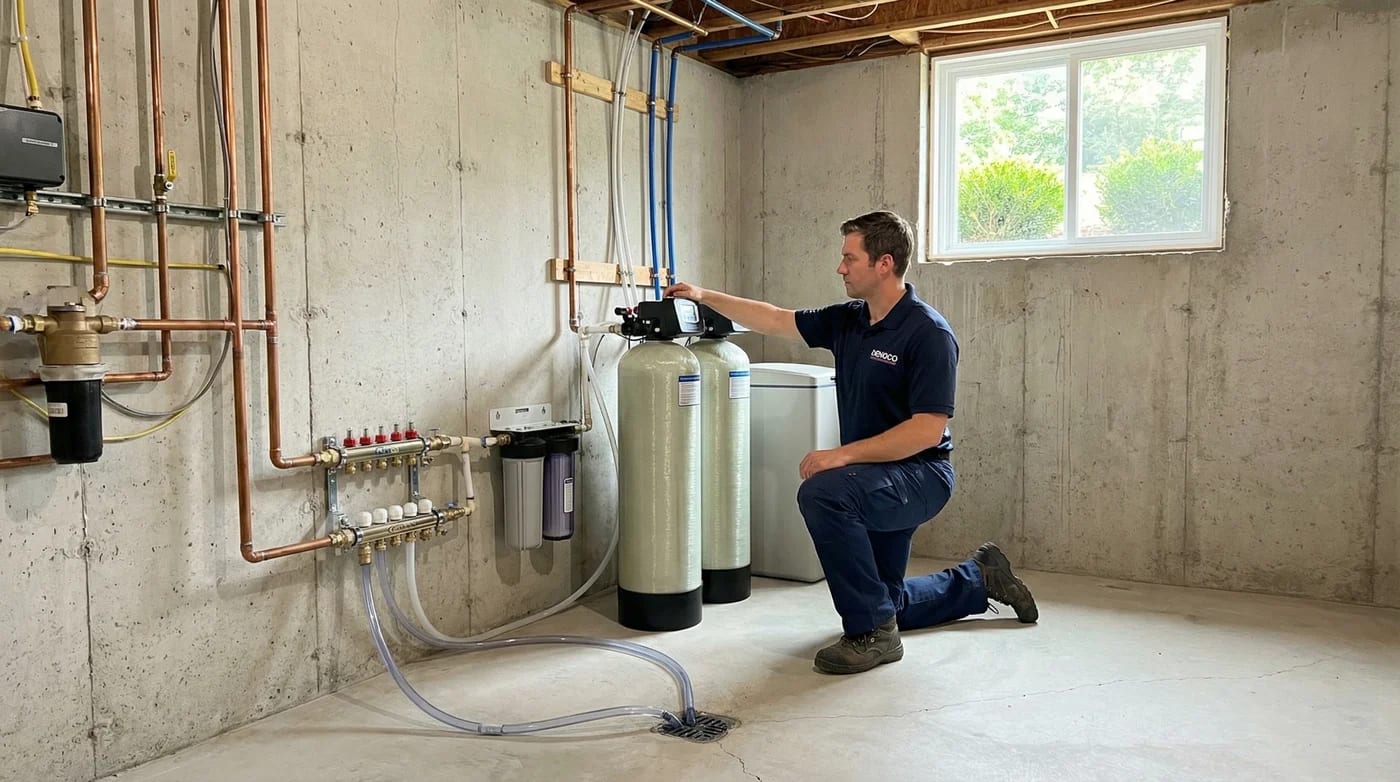
Water Treatment in Thousand Islands / Leeds & Grenville, ON
Premium work with honest diagnostics, clear scopes, and documentation you can keep. We route service by postal code and service type — your primary coordination branch is Kingston.
About this service in Thousand Islands / Leeds & Grenville
Water testing + treatment for municipal and well water — softeners, filters, iron/sulfur solutions, UV, and RO.
Common questions
Do I need water treatment in South-Eastern Ontario?
Sometimes — but you only know after testing. Municipal water is regulated and generally meets provincial standards, so most “treatment” needs are taste/odour, chlorine/chloramine, or fixture protection. Well water varies widely and can require chemistry treatment (hardness, iron, sulfur) and, when indicated by testing, disinfection steps like UV. We help you choose the smallest system that solves the real problem.
- Municipal: often taste/odour + scale protection
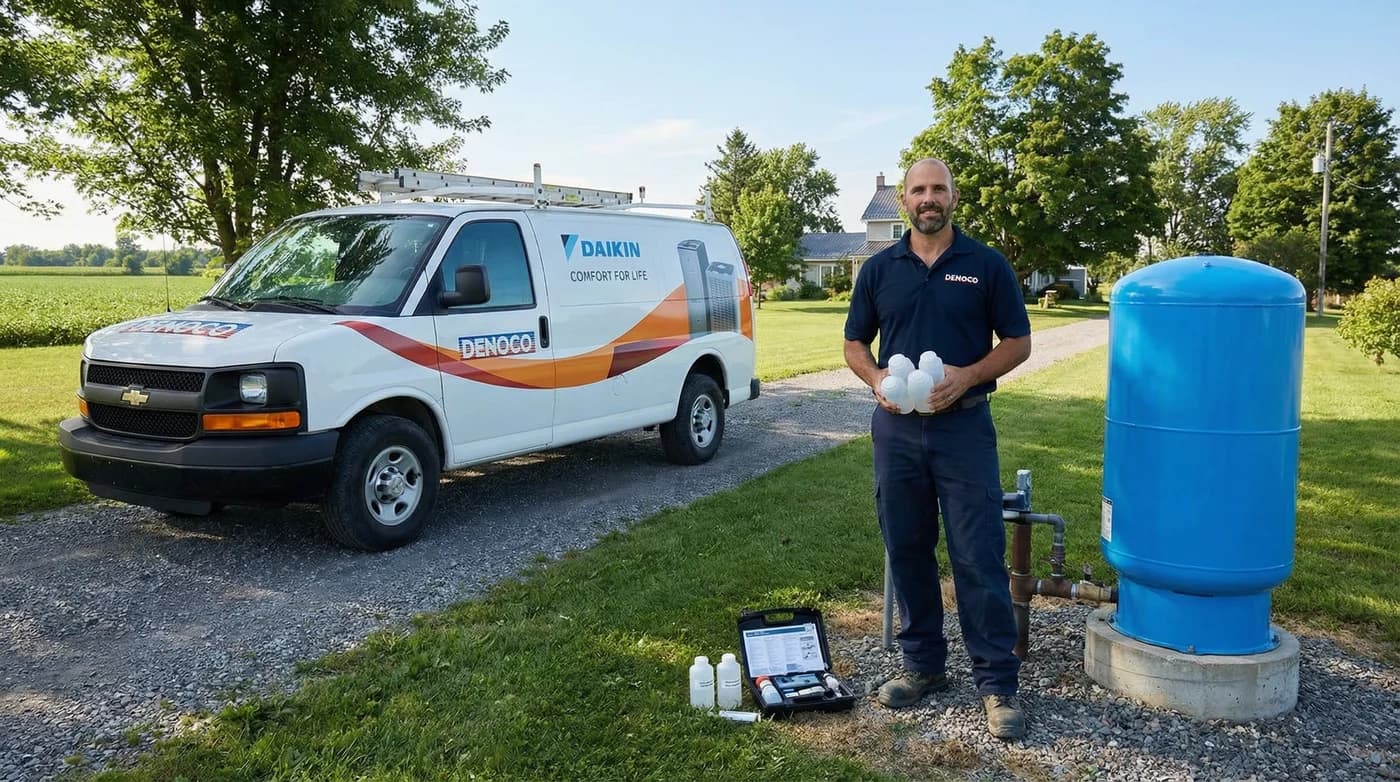
- Well water: hardness/iron/sulfur/sediment are common; bacteria testing matters
- Always verify what a device is certified to remove (NSF/ANSI claims)
What should I test before buying a softener, iron filter, or RO?
Test first, then buy. A softener solves hardness; it does not remove bacteria or “everything.” For well water, a yearly bacteria test is a baseline, and chemistry (hardness, iron/manganese, pH, tannins/sulfur where relevant) tells you what media is required. For municipal water, lead concerns are usually point-of-use at the kitchen, and taste/odour is typically carbon.
- Hardness (ppm or grains), iron/manganese, pH/alkalinity, sediment/turbidity
- Well water: total coliforms/E. coli testing at minimum
- Taste/odour: chlorine/chloramine context + carbon options
What system fixes what (softener, carbon, iron filter, UV, RO)?
Think in layers. A whole-home system protects plumbing and appliances; point-of-use systems target drinking water. We typically design from “protect the house” (sediment, hardness, iron) then add “improve the glass” (carbon/RO) only where it’s needed.
- Softener: hardness/scale protection (and sometimes limited iron)
- Carbon: chlorine/chloramine taste and many odours (municipal)
- Iron/sulfur treatment: staining and “rotten egg” odour on wells (media matters)
- UV: disinfection for well water when bacteria testing indicates risk
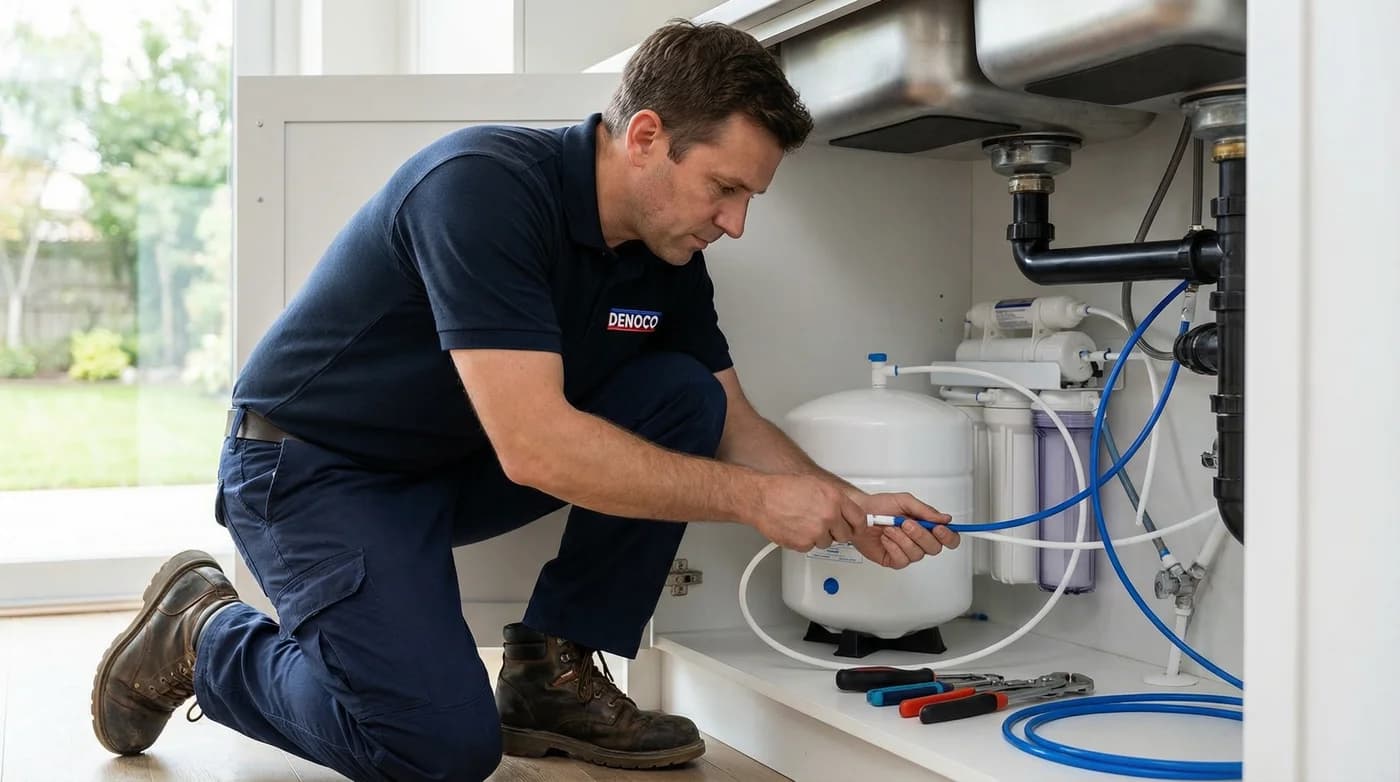
- RO: targeted drinking water filtration (point-of-use) with regular filter changes
Why does sizing matter so much for water treatment?
Undersized systems cause pressure drop, channeling, early media exhaustion, and poor results. Oversized systems waste salt and regeneration water. We size to your peak flow, hardness/iron load, and the backwash/regeneration requirements of the specific media — so performance is stable when multiple fixtures run at once.
What does water treatment really cost to own?
The purchase price is only part of the story. Ownership includes salt (softeners), cartridge/media changes, UV lamp replacement, and periodic retesting for wells. A “cheap” system that nobody maintains stops working — and the first sign is usually scale, staining, or a failed water heater.
- Softener: salt + periodic service and settings verification
- Cartridge systems: predictable filter replacement intervals
- UV: annual lamp replacement + keeping prefiltration clean for UV performance
Does water treatment help water heaters and plumbing last longer?
Yes — when it targets the right issue. Hardness drives scale on elements and inside tanks; iron and sediment load clog valves and strain fixtures. Proper pretreatment reduces nuisance failures and can lower maintenance on water heaters, dishwashers, coffee machines, and light commercial equipment.
Service gallery
Water Treatment FAQ
Straight answers for homeowners in Thousand Islands / Leeds & Grenville.
- Do I need a water softener or a filter?
- A softener solves hardness/scale. A filter can solve sediment or taste/odour — but filters do not automatically solve hardness. We start with testing, then choose the minimum system that solves the actual issue.
- Why does my well water smell like sulfur (rotten eggs)?
- Often hydrogen sulfide (H₂S) or sulfur-related bacteria. Treatment depends on measured levels and whether bacteria are present. We test first, then choose the right media or oxidation approach — generic carbon isn’t always enough.
- Iron stains my sinks and laundry — what fixes it?
- Iron treatment depends on the form of iron (dissolved vs oxidized) and whether manganese is also present. The right iron filter media and backwash sizing matter more than brand name.
- Is reverse osmosis (RO) a whole-house solution?
- Usually no. RO is typically best as point-of-use for drinking/cooking water because it has a drain/waste stream and ongoing filter maintenance. Whole-home RO is possible but is a bigger design and maintenance commitment.
- Do UV systems make well water safe?
- UV can disinfect when properly sized and maintained, but it does not remove sediment, hardness, or chemicals. UV performance also depends on clear water — prefiltration and periodic testing are part of doing it properly.
- How often do filters and media need to be replaced?
- It depends on your water and usage. Cartridge filters might be every few months; carbon media often needs periodic replacement; UV lamps are commonly annual; softeners need salt and occasional service. We provide a maintenance plan aligned to your test results.
- Do you handle light commercial water treatment (restaurants, offices)?
- Yes. We design for equipment protection and consistent flow: scale prevention for dishwashers/coffee equipment, taste/odour control, and maintenance schedules that staff can actually follow.