
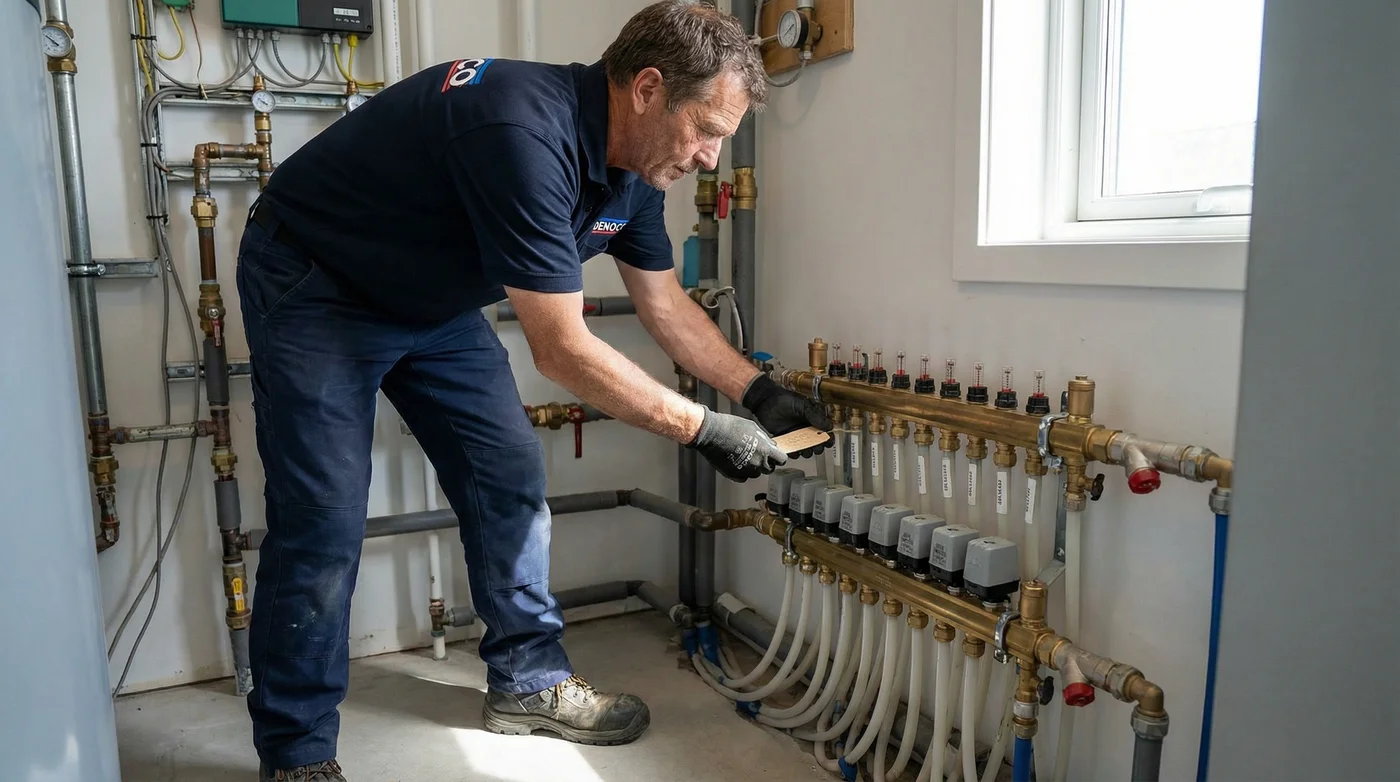
Hydronic Radiant Heating in Seeley's Bay, ON
Premium work with honest diagnostics, clear scopes, and documentation you can keep. We route service by postal code and service type — your primary coordination branch is Kingston.
About this service in Seeley's Bay
Radiant floors, panel radiators, and hydronic systems designed for quiet, even comfort in South-Eastern Ontario.
Common questions
Is hydronic radiant heating a good fit for South-Eastern Ontario?
Yes — radiant and hydronic systems are excellent for steady, even comfort in our shoulder seasons and long winters. The key is designing around your home’s heat loss, choosing the right “emitters” (floors, panels, fan coils), and setting a low-temperature water strategy so the system runs quietly and efficiently.
What’s the difference between radiant floor, panel radiators, and hydronic baseboard?
They’re all hydronic — the difference is how they deliver heat to the room. Radiant floors prioritize comfort and low water temperatures; panel radiators are often the cleanest retrofit solution; hydronic baseboard is compact and familiar but can require hotter water. We recommend the emitter that matches your structure and goals.
- Radiant floors: steady comfort, great with low water temps
- Panel radiators: retrofit-friendly zoning and fast response
- Hydronic baseboard: compact, but may need higher temperatures depending on sizing
Why do “water temperature” and outdoor reset matter so much for hydronics?
Hydronic systems are most comfortable when they deliver gentle, steady heat. Outdoor reset uses outdoor temperature to automatically lower or raise supply-water temperature through the season. Lower water temperatures usually mean better efficiency (especially with condensing boilers and air-to-water heat pumps), less noise, and fewer temperature swings.
Can you add radiant heating to an existing home without a full gut job?
Often, yes — but the approach depends on access and floor construction. In older South-Eastern Ontario homes, panel radiators, fan coils, or targeted radiant areas (bathrooms, entries, basements) can deliver most of the comfort benefit with far less disruption than whole-house in-floor retrofits.
- Targeted radiant zones where it matters most (bathrooms, basements)
- Panel radiators for room-by-room zoning without opening floors
- Fan coils where you also want cooling or faster response
What causes uneven heat, gurgling, or “some rooms cold” in a hydronic system?
Most comfort complaints come down to flow and control strategy: trapped air, poor balancing, undersized circulators, incorrect zoning, or water temperatures that don’t match the emitters. A good fix starts with measurement (temps, pressures, flow/zone behavior) — not swapping random parts.
- Air binding and incomplete purging (gurgling, cold loops)
- Flow imbalance across zones (one zone steals the heat)
- Control/thermostat logic that short-cycles the heat source
How much does hydronic radiant heating cost in South-Eastern Ontario?
Cost depends on whether you’re repairing an existing system, retrofitting distribution, or installing a full new heat source. The biggest cost drivers are retrofit access, number of zones, and the heat source (boiler, combi, or heat pump). We scope constraints early so pricing is predictable, not “surprise add-ons.”
- Retrofit access (floors/ceilings) and emitter choice
- Zoning count and control strategy
- Heat source choice and venting/electrical constraints
Pricing varies by home conditions and scope. We confirm details before starting work.
How long does a hydronic radiant project take?
Small repairs can be completed in a single visit if parts are available. Retrofits and new installs depend on access, finish work, and whether other regulated trades are involved. Before booking, we’ll tell you what’s likely a “same-day fix” versus a staged project with lead times.
- Service calls: diagnose first, repair if scope and parts allow
- Retrofits: staged work to minimize disruption in finished spaces
- Installs: schedule depends on emitter type, zoning, and heat source selection
Who is hydronic radiant heating best for?
Hydronics is ideal when you want even comfort, quiet operation, and room-by-room control. It’s also a strong choice for basements, additions, garages, and homes where ductwork is limited. If you’re electrifying, a low-temperature hydronic distribution strategy can pair well with modern heat sources.
- Homeowners who want steady, even heat with minimal air movement
- Projects needing zoning for additions, basements, or multi-level comfort
- Homes where ductwork changes would be disruptive or expensive
Do you handle permits and code-required work for hydronic heating?
Where permits, inspections, or regulated trade work is required (for example, electrical, fuel connections, or venting changes), we coordinate it properly and document what was done. If any portion requires a specific license, we ensure the right credentialed trade completes that scope.
How do I compare hydronic quotes (and avoid bad installs)?
Ask for the design thinking in writing: what rooms are zoned together, what supply-water temperatures are expected, and how they’ll commission and balance flow. Avoid quotes that don’t mention controls, mixing strategy, or how air will be purged and verified — those are where comfort problems usually come from.
- Written zone plan and thermostat/control approach
- Supply-water temperature strategy (and whether outdoor reset is included)
- Commissioning plan: purge, balance, verify temps/flows, and handoff documentation
Service gallery
Hydronic Radiant Heating FAQ
Straight answers for homeowners in Seeley's Bay.
- Is radiant floor heating “better” than radiators?
- Not always — it depends on the home. Radiant floors are amazing for comfort and low water temperatures, but retrofits can be disruptive. Panel radiators are often the best retrofit emitter: fast response, easy zoning, and clean installs. We’ll recommend the emitter that fits your structure and budget.
- Can I run radiant floors under hardwood or carpet?
- Sometimes. Floor coverings change heat output: thick underlay and carpet reduce performance, while tile and thin engineered wood usually work better. The right approach is to design around the finished floor’s heat transfer and your room-by-room heat loss so the system doesn’t need overly hot water.
- Why does my boiler short-cycle with radiant?
- Short-cycling usually means the heat source is producing more heat than the system can absorb in that moment — often due to zoning strategy, control settings, or a mismatch between emitter output and water temperature. Fixing it is about stabilizing flow and control logic, not just replacing parts.
- What does “mixing” mean in hydronic heating?
- Mixing controls supply temperature to the emitters by blending hot supply water with cooler return water. This matters because different emitters want different temperatures: radiant floors are typically low-temp, while some baseboard/radiators may require higher temps. Proper mixing keeps comfort steady and protects equipment.
- Why is my radiant system noisy or gurgling?
- Noise is commonly trapped air, cavitation at a circulator, or fast changes in flow when zones open/close. The fix is usually a proper purge, verifying system pressure/expansion tank behavior, and ensuring the system has stable flow through the right piping and control strategy.
- Do hydronic systems need regular maintenance?
- Yes — but it’s straightforward when the system is built cleanly. We recommend seasonal checks on pressure, visible leaks, air removal behavior, and control operation. For boilers and combi units, combustion safety and venting checks matter. The goal is preventing small issues (air, pressure drift) from becoming costly failures.
- Can hydronics work with a heat pump?
- Yes. Air-to-water and ground-source heat pumps can feed hydronic distribution — especially low-temperature emitters like radiant floors, properly sized panel radiators, or fan coils. The design priority is keeping water temperatures as low as practical while still meeting heat loss, because that’s where heat pumps perform best.
- What are signs my hydronic system is losing pressure?
- Frequent need to top up water, relief valve discharge, air entering repeatedly, or zones that stop heating can indicate a pressure problem. Pressure drift is often a symptom — the cause could be a leak, an expansion tank issue, or a fill valve problem. It’s worth diagnosing before it damages the heat source.
- Is radiant heat good for basements in Ontario?
- Yes — basements often feel cold because the slab and lower walls pull heat away. Radiant floors can be a great comfort upgrade, but insulation and heat loss matter. We’ll recommend a strategy that makes sense for your slab, ceiling height, and whether you’re finishing the space.