
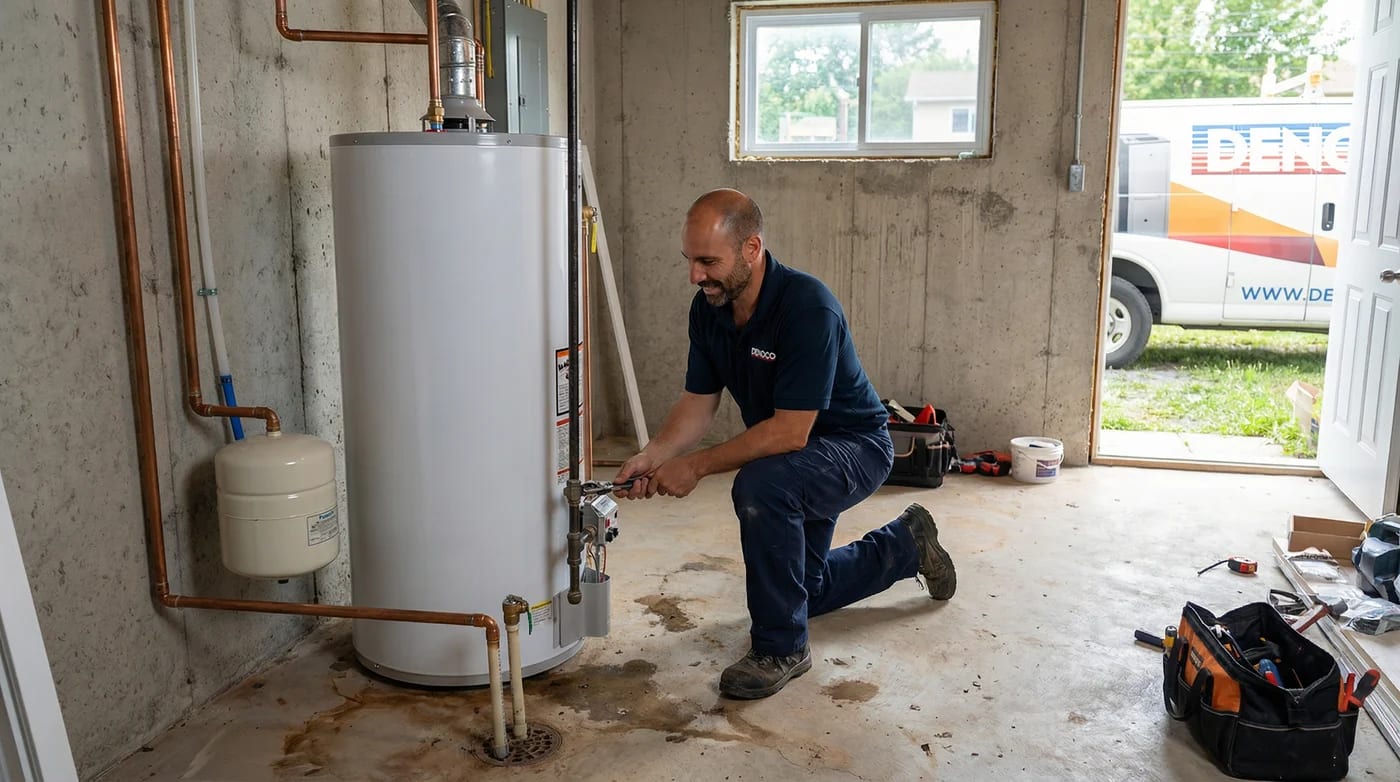
Water Heaters in Howe Island, ON
Premium work with honest diagnostics, clear scopes, and documentation you can keep. We route service by postal code and service type — your primary coordination branch is Kingston.
About this service in Howe Island
Tank, tankless, and heat pump water heaters — sized for your home, water quality, and South-Eastern Ontario utilities.
Common questions
Tank vs tankless vs heat pump water heater: what fits South-Eastern Ontario homes?
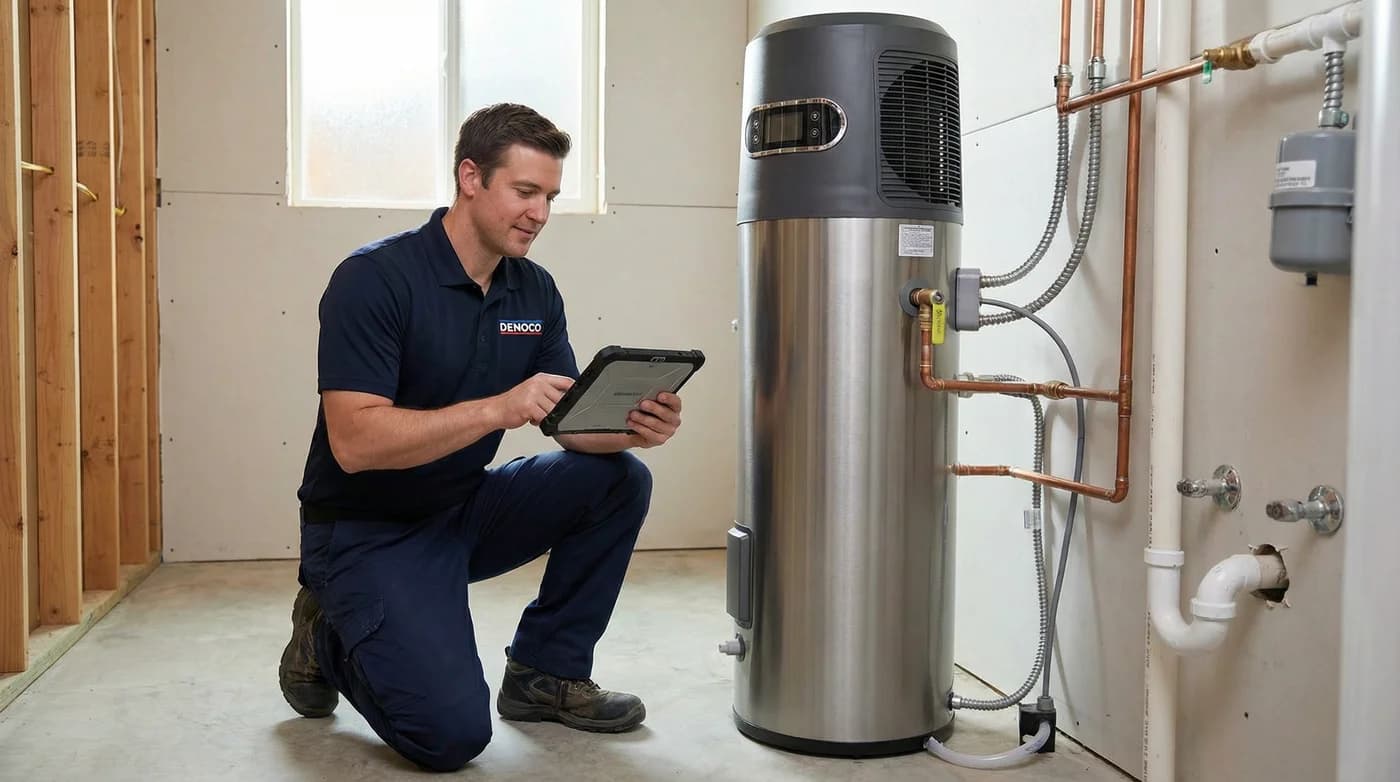
Storage tanks are still the default for high simultaneous hot-water use (showers plus laundry). Tankless delivers continuous flow when sized correctly but is sensitive to water hardness and needs professional service on gas models. Heat pump water heaters move heat from the surrounding air into the tank — very efficient on paper — but need adequate space, manageable noise, condensate disposal, and often more electrical capacity than a standard tank.
- High peak demand: often storage gas or right-sized tankless
- Tight space / lower use: electric tankless or compact tank options
- Efficiency focus + suitable basement/utility room: HPWH (verify air volume and circuit)
How does hard water or well water affect my water heater?
Minerals and sediment accelerate tank wear: rumbling, efficiency loss, and shorter element or burner life on electric and gas tanks. On wells, iron and grit can speed anode consumption and plug drains. The fix is not only “a bigger tank” — it’s matching maintenance (flushing schedule, anode checks) and sometimes pretreatment so the heater isn’t fighting your water chemistry alone.
- Annual or seasonal flushing may be appropriate for sediment-prone water
- Anode inspection/replacement matters most when hardness or aggressive water is present
- Tankless in hard water: descaling intervals are part of ownership — not optional
What safety items matter on a water heater install in Ontario?
Storage tanks need a temperature-and-pressure (T&P) relief valve with a safe discharge path. Tank temperature should balance Legionella guidance with scald risk — many homes benefit from a thermostatic mixing valve at fixtures while keeping stored water hot enough for safety. Gas water heaters need proper venting and combustion air; electric units need correct overcurrent protection and grounding. Licensed trades handle regulated work so your install is insurable and code-aligned.
Why does my hot water run out faster than it used to?
Common causes are sediment buildup, a failed dip tube or element (electric), thermostat or control issues, increased household demand, or a tank that has simply lost capacity to scale. We diagnose before selling a replacement — sometimes it’s a fix; sometimes the honest answer is a new unit.
Repair vs replace: when is a new water heater the better investment?
If the tank is leaking from the shell, replacement is the answer. For younger units, element, valve, or control replacements can be economical. If you’re past roughly 10–12 years with rust-coloured water, noise, or repeat failures, a new high-efficiency option often costs less than stacking repairs — especially when you factor efficiency and warranty.
Are there rebates or loans for heat pump water heaters in Ontario?
Provincial and federal efficiency programs evolve. Heat pump water heaters have appeared in broader home-efficiency and electrification discussions; eligibility, stack rules, and approved contractor requirements change. We’ll tell you what typically needs to be true (equipment class, install documentation) and point you to current official program pages before you budget around an incentive.
Rebate amounts and eligibility change. Confirm on Ontario.ca, Natural Resources Canada, and your utility before purchase.
Service gallery
Water Heaters FAQ
Straight answers for homeowners in Howe Island.
- What size water heater do I need for a family in Eastern Ontario?
- Sizing is about peak gallons-per-minute or first-hour rating, not a rule of thumb from square footage. We ask how many showers run at once, tub fills, dishwasher patterns, and whether you have a soaker tub. Then we match tank first-hour rating or tankless flow + temperature rise to your real usage.
- Tankless sounds great — why might it be wrong for my house?
- Undersized tankless units disappoint in winter when incoming water is colder. Hard water without a maintenance plan causes scale and flow problems. Gas tankless also needs correct venting and annual professional service. If any of those are weak spots, we’ll say so before you buy.
- What’s that rumbling or popping from my tank?
- Often it’s sediment or scale at the bottom of the tank causing overheating pockets and noise. Flushing can help if caught early. If the tank is old or noise is severe, it can signal the end of reliable life — we’ll inspect and give straight options.
- Should I set my water heater to the hottest setting?
- Not usually. Stored water needs to be hot enough for safety guidance, but fixture delivery temperatures should be tempered to reduce scald risk for kids and elders. We discuss mixing valves and realistic temperature targets for your household.
- Do heat pump water heaters work in cold basements?
- They can, but performance and noise depend on air temperature, air volume, and where exhaust air goes. Tight cold closets are often a poor fit without ducting. We assess the mechanical room before recommending HPWH.
- Will a water softener help my water heater last longer?
- If hardness is the problem, yes — softening reduces scale load on the tank and elements. If iron or bacteria is the issue, a softener alone may not be enough. We recommend testing and matching treatment to chemistry.
- What’s included in a Denoco water heater replacement?
- Code-appropriate shutoffs, safe T&P discharge, level/secure install, combustion and vent checks on gas, electrical verification on electric or HPWH, leak test, and a walkthrough of temperature settings, maintenance, and warranty registration.