
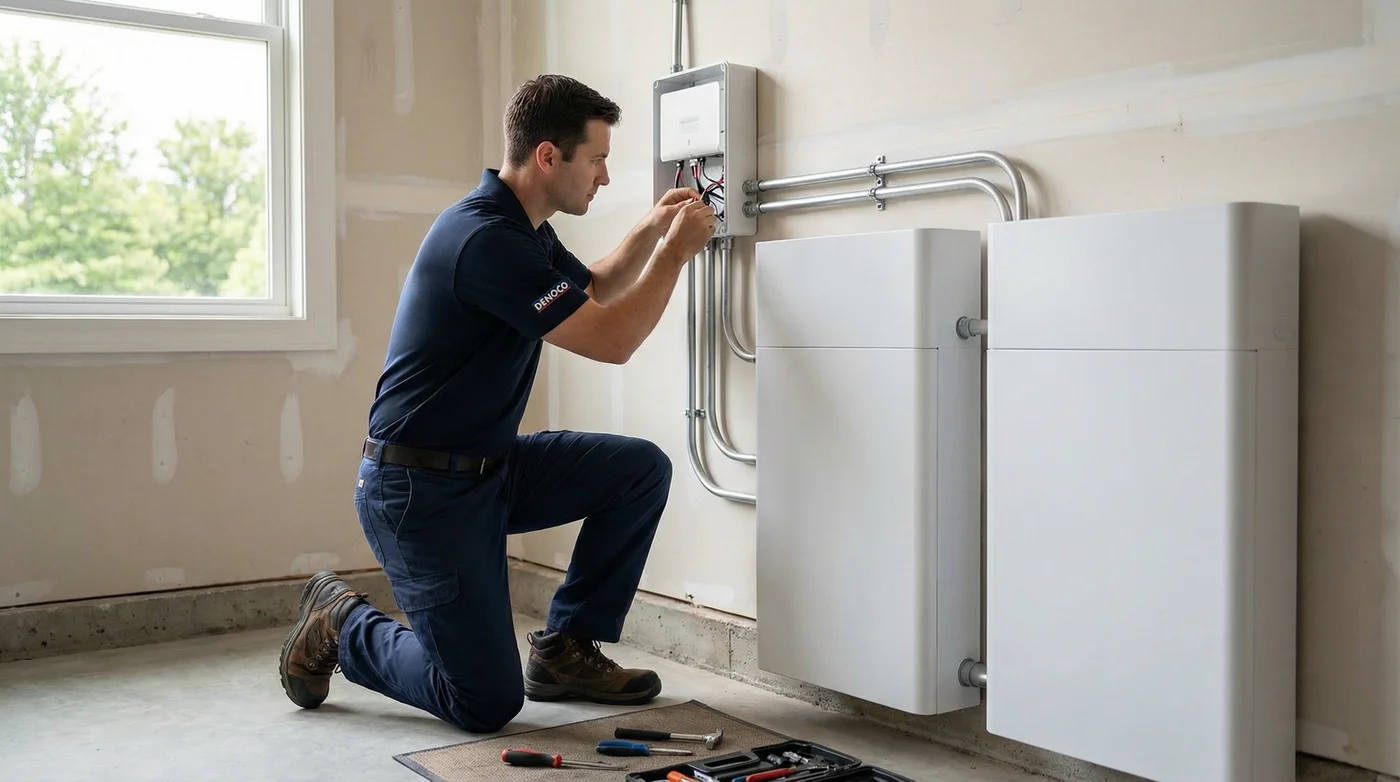
Battery Storage in Harrowsmith, ON
Premium work with honest diagnostics, clear scopes, and documentation you can keep. We route service by postal code and service type — your primary coordination branch is Kingston.
About this service in Harrowsmith
Home battery backup and Ontario load shifting (TOU/ULO) — designed around the loads you actually need.
Common questions
What does a home battery actually do in an outage?
A battery can power selected circuits when the grid goes down, depending on how your system is wired. Most homes choose critical loads (sump pump, fridge, lights, internet, furnace/boiler controls) rather than the entire panel. The best starting point is your load list and how long you want those loads supported.
Whole-home backup vs critical loads: what’s realistic?
Whole-home backup can be possible, but it’s not automatic. High loads (electric ranges, dryers, EV chargers, large well pumps, central AC) can exceed the inverter’s power output (kW) even if the battery has energy (kWh). A critical loads approach is usually more predictable: you pick priorities and get reliable runtime.
How does load shifting work with Ontario TOU and ULO rates?
Load shifting charges a battery when electricity is cheapest and uses that energy during more expensive hours. Ontario’s regulated plans include Time-of-Use (TOU), Ultra-Low Overnight (ULO), and Tiered pricing, each with different time windows and price spreads. We design around your actual plan and usage pattern — not a generic spreadsheet.
- TOU winter: off-peak 7 p.m.–7 a.m. and weekends/holidays (OEB RPP schedule)
- ULO: lowest overnight price (11 p.m.–7 a.m.) with a higher weekday peak window
- Tiered: simple price bands by monthly kWh — load shifting value depends on your profile
What are the current Ontario TOU and ULO prices (and why they matter)?
Ontario’s OEB-published regulated prices (effective Nov 1, 2025 through Apr 30, 2026) show why load shifting can pencil out: TOU ranges from 9.8¢ to 20.3¢/kWh by period, while ULO can be as low as 3.9¢/kWh overnight with a weekday on-peak of 39.1¢/kWh. That spread is exactly what batteries are built to exploit — if your system is set up correctly.
- TOU winter: Off-peak 9.8¢, Mid-peak 15.7¢, On-peak 20.3¢/kWh
- ULO: Ultra-low overnight 3.9¢ (11 p.m.–7 a.m.), On-peak 39.1¢ (weekdays 4–9 p.m.)
- Tiered winter: 12.0¢/kWh first 1,000 kWh/month, then 14.2¢/kWh
Rates and periods can change seasonally and by OEB updates. We confirm current pricing with your utility and the latest OEB posting.
Solar + battery vs battery-only: which is better in South-Eastern Ontario?
Solar + battery often delivers the best experience: solar can recharge the battery during daylight and improve outage endurance, while the battery shifts energy into evening peaks. Battery-only can still make sense for outage protection and TOU/ULO shifting — but the economics depend heavily on your rate plan, your load profile, and equipment capability.
Net metering vs load displacement — what’s the difference?
Net metering typically allows you to export excess generation to the grid for bill credits, while load displacement is designed for generation used for on-site consumption without exporting to the grid. The right choice depends on your distributor program and how you want the system to operate alongside solar and storage.
How do I size a battery (kW vs kWh) without getting sold the wrong system?
kWh is how long you can run things; kW is how many things you can start/run at once. A system can have plenty of energy but still trip on high starting loads. We size by building a critical load list (with surge/start considerations), then matching inverter power and battery energy to your target outage duration and your load shifting goals.
- List critical loads and their running watts + starting surge
- Decide target runtime (e.g., overnight vs multi-day with solar recharge)
- Choose wiring approach: critical loads panel, managed loads, or full panel (when feasible)
Do you handle permits, inspections, and utility coordination?
Yes. Battery storage and backup wiring is regulated electrical work. We plan the scope so it’s inspectable, coordinate around the utility/distributor requirements where applicable, and provide a commissioning walkthrough so you understand outage behavior and load priorities.
How much does home battery storage cost in South-Eastern Ontario?
Cost depends on battery capacity, inverter power, wiring approach (critical loads vs whole panel), physical install conditions, and whether solar integration is included. We quote after confirming your load priorities and panel constraints so you’re not paying for capacity you can’t use — or buying a system that can’t run what you assumed it would.
Pricing varies by home and scope. We confirm details before starting work.
How long does installation take?
Many installs are 1–2 days once the design is confirmed and equipment is on hand, but timelines vary based on panel work, routing, and any utility coordination. We’ll set expectations upfront: what’s “install day” versus what’s “approval/inspection day.”
What should I ask when comparing battery storage quotes?
Ask what loads are backed up, how they’re wired, and whether the quote includes commissioning and a homeowner “outage rehearsal.” Ask how the system will charge/discharge under TOU/ULO, and what happens with high starting loads. If answers are vague, you’re buying risk.
- Critical loads list included in writing (breakers + expected runtime)
- kW (inverter output) and kWh (storage) specified clearly
- Rate-plan strategy: TOU vs ULO settings and what you can change later
Service gallery

Battery Storage FAQ
Straight answers for homeowners in Harrowsmith.
- What is Ultra-Low Overnight (ULO) pricing in Ontario?
- ULO is an Ontario regulated pricing plan with a very low overnight energy price (11 p.m.–7 a.m.) and a higher weekday peak window (4–9 p.m.). It can be a strong fit for EV charging and batteries because the price spread rewards charging overnight and using stored energy during the expensive peak.
- What are Ontario’s current TOU and ULO prices?
- As of the OEB’s Nov 1, 2025 price period (through Apr 30, 2026), TOU winter is 9.8¢ off-peak, 15.7¢ mid-peak, and 20.3¢ on-peak per kWh. ULO includes 3.9¢ ultra-low overnight and a weekday 39.1¢ on-peak window. We confirm your utility’s current schedule before commissioning.
- Can a battery run my whole house?
- Sometimes, but most homes prioritize critical circuits. High loads (range, dryer, EV, big pumps) can exceed inverter power even if the battery has plenty of energy. The safest plan is to list critical loads and design wiring/runtime around those priorities, then expand if the home’s service and budget support it.
- Battery vs generator: which is better for outages?
- Batteries are silent and instant, great for short-to-medium outages and critical loads. Generators can run longer at higher loads if fuel supply is reliable. Many homes do best with a hybrid approach: battery for instant switchover and peak shaving, generator for extended outages or large loads.
- Does a solar + battery system help more than a battery alone?
- Often yes. Solar can recharge the battery during daylight and extend outage runtime, especially in spring/fall. Battery-only systems still add value for outage protection and TOU/ULO shifting, but the economics depend more on your rate plan and your load profile.
- What is net metering and how does it relate to batteries?
- Net metering typically allows you to export excess generation for bill credits, while load displacement is designed for on-site use without export. How batteries interact depends on your distributor program and system settings. We design the control strategy so you understand what’s happening and why.
- How do I choose between Tiered, TOU, and ULO pricing?
- It depends on when you use power. Hydro One describes customer choice and switching between plans, and the OEB publishes the regulated prices and periods. We’ll look at your usage (and EV/heat pump plans) and recommend the plan that your battery strategy can actually exploit.
- Do batteries work in winter?
- They can, but installation location matters. Garages and utility rooms are common. The key is selecting equipment that’s suitable for the environment and commissioning it correctly so charging/discharging behavior is predictable in cold weather. We’ll discuss placement, ventilation/clearances, and expectations before install.
- How long do home batteries last?
- Lifespan depends on warranty terms and how much cycling you do (daily load shifting vs mostly standby backup). We’ll align your settings to your goal: maximize bill savings with frequent cycling or preserve capacity for outage standby, and we’ll show you what that means in real usage.
- What’s the biggest mistake homeowners make buying battery storage?
- Buying capacity without a load plan. If you don’t know what you’re backing up and what the inverter can actually run, you can spend a lot and still lose the circuit you care about. The second common mistake is ignoring rate-plan strategy — a battery that isn’t scheduled isn’t load shifting.