
This service is delivered from our Kingston branch for Burritts Rapids.
Dirty Sock Syndrome (AC / Heat Pump Odor) in Burritts Rapids, ON
Premium work with honest diagnostics, clear scopes, and documentation you can keep. We route service by postal code and service type — your primary coordination branch is Smiths Falls (HQ).
About this service in Burritts Rapids
That “gym sock” or sour AC smell at startup — diagnosed properly and fixed at the source.
Common questions
What is “dirty sock syndrome” in an AC or heat pump?
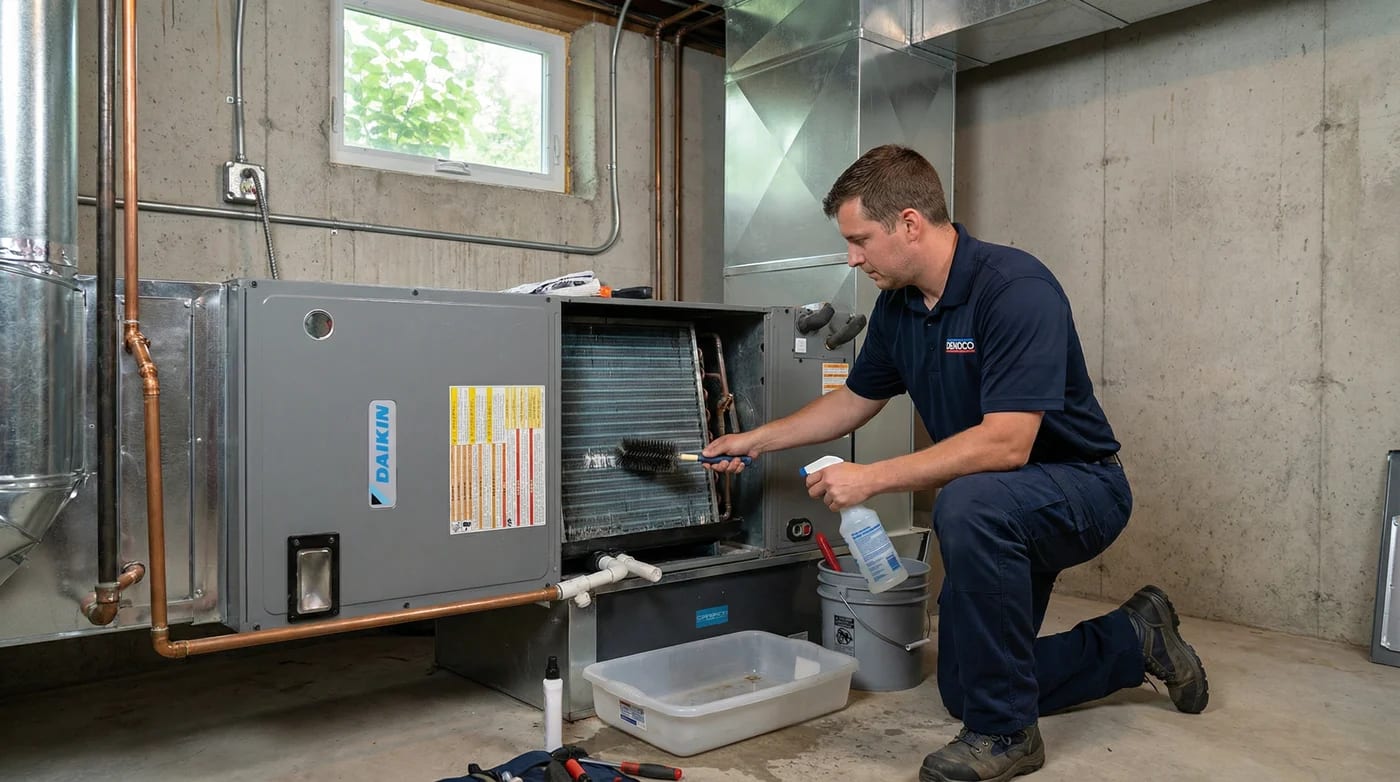
Dirty sock syndrome is a musty, sour “gym sock” odor that often appears when cooling starts. A common cause is microbial growth (biofilm) on the evaporator coil or in the condensate pan/drain. The fix is removing the biofilm and preventing moisture from lingering — not masking the smell.
Why is the smell strongest right at AC startup?
When the system sits off, the coil area can stay damp. Odor-causing compounds build up and then get blown into the home at the first startup burst. The smell may fade after a few minutes of runtime, but recurring startup odor usually means the underlying biofilm and moisture conditions are still present.
How long does it take to fix dirty sock syndrome?
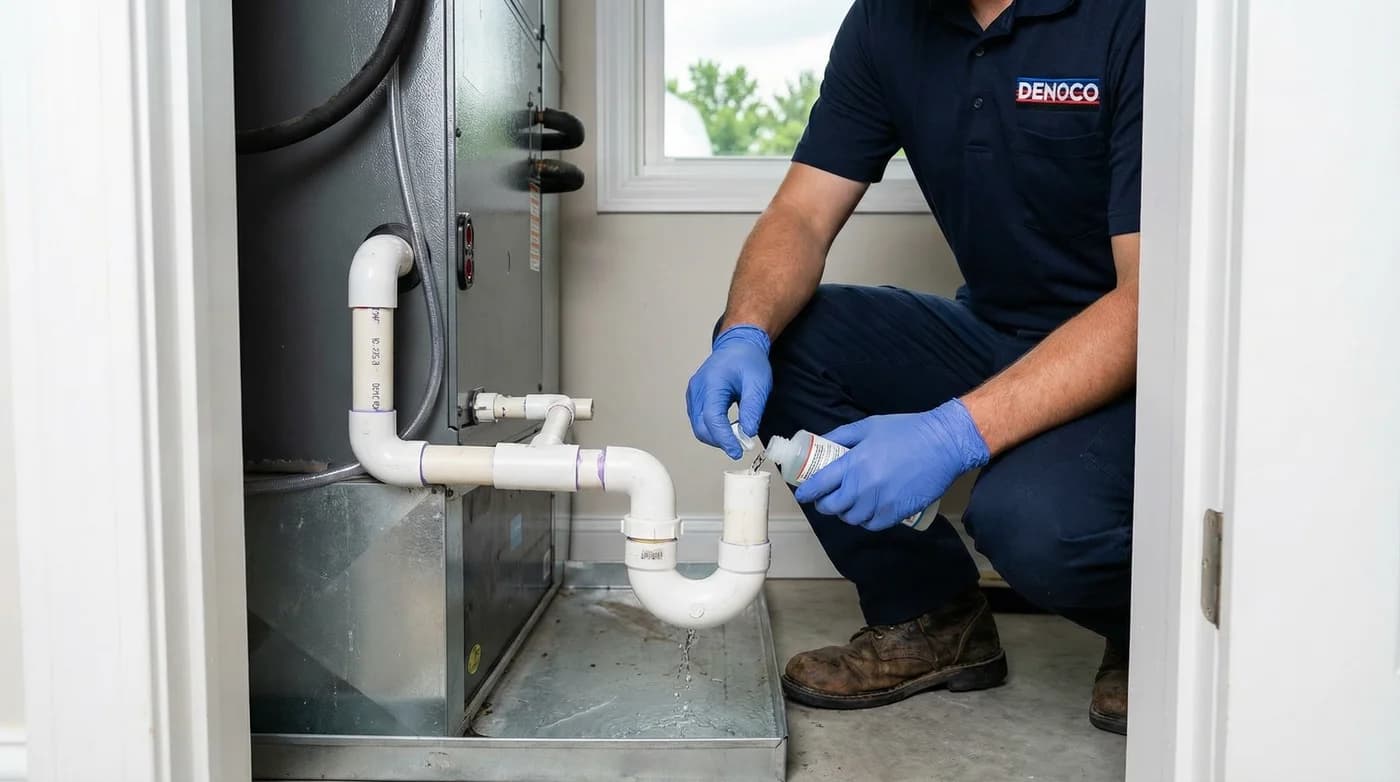
If the source is the coil/pan/drain and access is reasonable, many cases improve immediately after proper cleaning and drain service. If there are contributing factors (high humidity, short cycling, airflow issues), we address those too — otherwise the odor can return during the next humid stretch.
What does it cost to fix?
Cost depends on diagnosis time, access to the coil, severity of buildup, whether the drain needs clearing/repair, and whether prevention upgrades (filtering, UV‑C, humidity control) make sense. The key is scoping the real cause first so you don’t pay for “solutions” that don’t touch the source.
Does UV‑C work for dirty sock syndrome?
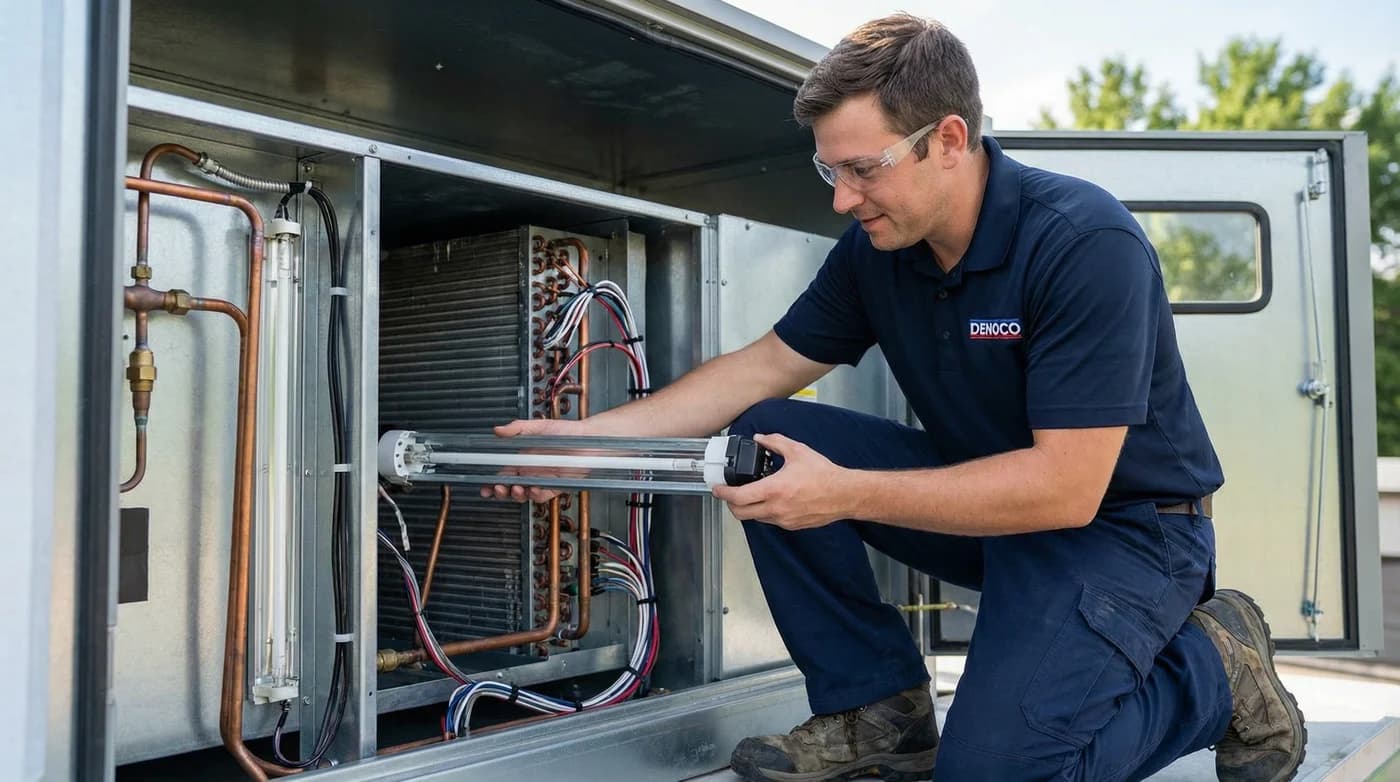
UV‑C can help reduce microbial growth when installed to irradiate the coil area, so it’s often useful for prevention and recurrence reduction. It’s not a stand-alone cure if biofilm and drainage issues already exist. Best practice is clean first, then use UV‑C to keep the coil cleaner over time.
When is duct cleaning actually warranted?
Duct cleaning is most useful when there’s verified contamination or heavy debris in ducts. For dirty sock syndrome, the coil/pan/drain is more commonly the source because that’s where moisture lives. We only recommend duct work if your symptom pattern and inspection evidence point there.
What can I do today to reduce the smell?
Start with basics: replace the filter with the correct size, unblock returns/supplies, and run the fan to help dry the coil area. Check for obvious water around the air handler. Avoid spraying fragrances into the system. If the smell persists or keeps returning, book service — recurring odor usually needs coil/drain attention.
Official-style homeowner phrasing you can use when calling
If you’re booking service, tell us: “Musty/dirty sock smell when AC starts,” “sour milk smell at startup,” or “moldy AC smell that fades after a few minutes.” That pattern helps us prioritize coil/pan/drain diagnostics and bring the right cleaning tools on the first visit.
Service gallery
Dirty Sock Syndrome (AC / Heat Pump Odor) FAQ
Straight answers for homeowners in Burritts Rapids.
- What is dirty sock syndrome (DSS) in HVAC?
- Dirty sock syndrome is a musty “gym sock” or sour smell that often hits when your AC or heat pump starts up. A common cause is microbial growth (biofilm) on the evaporator coil or in the condensate pan/drain. Deodorizers may mask it briefly, but the smell returns if the source remains.
- What are other names homeowners use for this smell?
- People often describe it as: “dirty gym socks,” “musty AC smell,” “moldy air conditioner smell,” “sour milk smell,” “wet laundry smell,” or “basement musty smell when cooling starts.” The pattern matters more than the exact phrase: a spike at startup strongly suggests coil/pan/drain moisture issues.
- Why does it smell strongest right when the AC turns on?
- Because odor-causing compounds can build up when the coil sits damp while the system is off. At startup, the first burst of airflow picks up those compounds and spreads them through the house. Once the system runs, the smell may fade — but the underlying biofilm can remain until it’s cleaned.
- Is dirty sock syndrome caused by a dirty filter?
- A dirty or low-quality filter can contribute by letting more dust/organic debris reach the coil, but DSS is typically a coil/pan/drain moisture problem. Filter upgrades help prevention, but fixing the odour usually requires cleaning and addressing the moisture conditions that allowed growth.
- Will it come back after cleaning?
- It can if the conditions that caused it remain — for example, a slow/clogged condensate drain, high indoor humidity, short cycling from oversizing, or airflow problems. A lasting fix is “clean + correct”: remove biofilm and correct drainage/humidity/airflow so the coil doesn’t stay wet and dirty.
- Do UV lights solve dirty sock syndrome?
- UV‑C can help reduce microbial growth when installed to irradiate the coil area, and it’s often used as a maintenance step to reduce recurrence. But UV doesn’t remove existing biofilm or fix drainage/humidity issues. The best results come after cleaning, with UV‑C as part of prevention.
- Is this the same as a dead animal smell or sewer smell?
- Usually not. Dead animal odors tend to be constant and localized. Sewer smells can point to a dried trap or plumbing venting issue. Dirty sock syndrome more commonly spikes when cooling starts and then fades. If the pattern doesn’t fit, we broaden the diagnostic net.
- Do I need duct cleaning to fix this smell?
- Not usually. If the source is the evaporator coil or drain system, cleaning ducts alone won’t fix it. Duct cleaning can be useful if there’s confirmed contamination or heavy debris, but we prioritize the coil/pan/drain first — that’s where the moisture and biofilm typically live.
- What can I do today before booking service?
- Replace the filter (use the correct size), run the fan for a while to help dry the coil, check for obvious standing water near the air handler, and make sure supply/return vents aren’t blocked. Avoid spraying fragrances into the system — it doesn’t remove the source and can add residue to the coil.
- When should I call a pro?
- If the smell persists more than a few days, returns repeatedly, you see water around the air handler, or anyone in the home is having allergy/asthma flare-ups. Professional service is also smart before peak summer, so you fix odours and drainage before humidity and run-time make it worse.